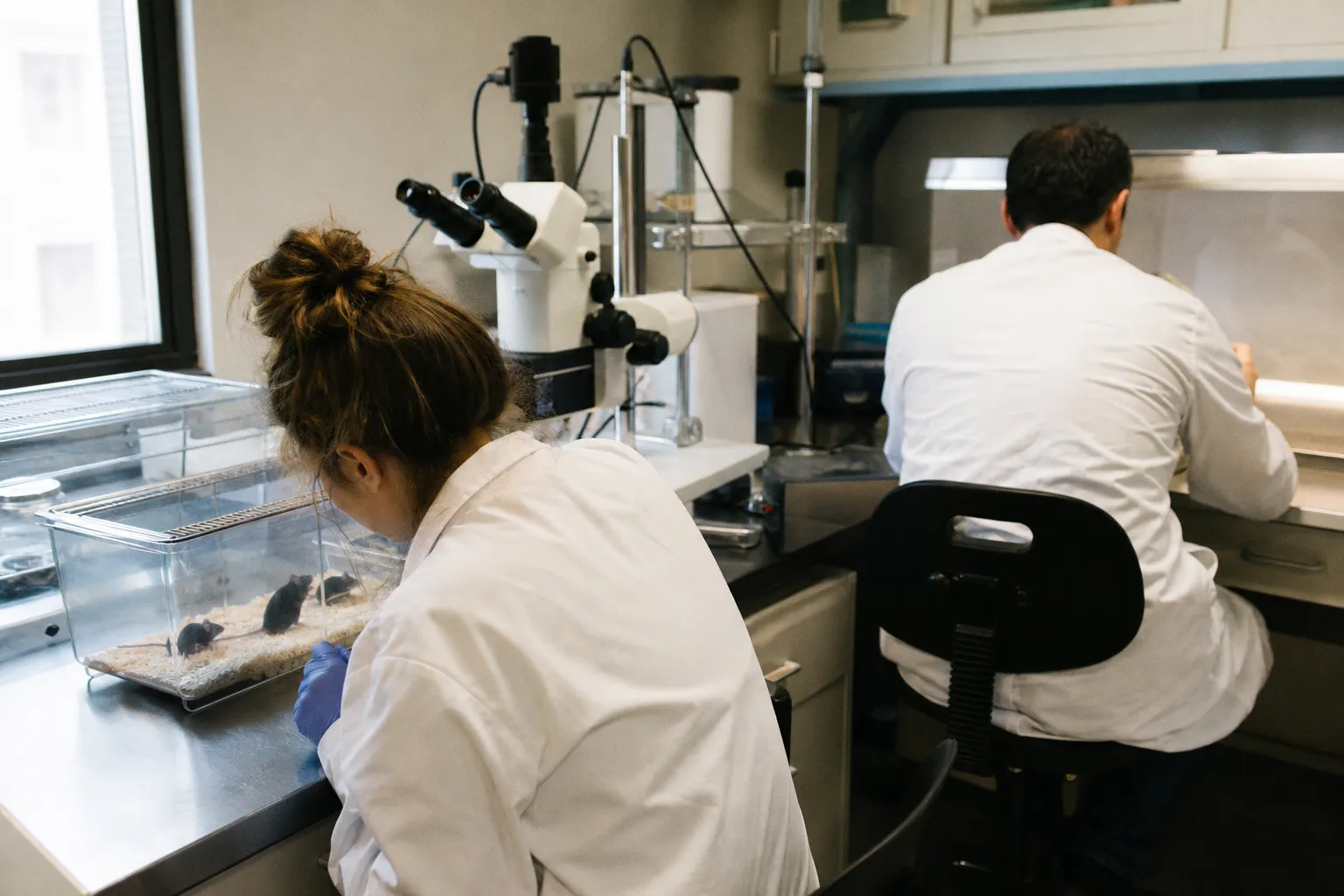
The useful finding is not “sleep is optional”
The important phrase is “in awake mice.” If accurate, the study suggests that at least one restorative process normally associated with sleep may be experimentally activated outside normal sleep.
That matters because sleep is not one monolithic state. It is built from phases, including REM and non-REM sleep, and it supports cognition, immune function, memory, attention, and health. New Scientist’s recent coverage frames sleep as a biological compromise: essential, but costly in evolutionary terms because a sleeping animal cannot defend itself or forage.
For humans, that compromise is unusually compressed. According to the same report, humans sleep less than any of the 30 primate species for which comparable data has been assembled. A primate with our body size, brain size, reproductive schedule, evolutionary position, and sleep environment would be predicted to sleep around 9.5 hours. The observed human average, after controlling for society type, is closer to 7 hours — about 35% less.
That is the context in which this mouse finding lands. Human sleep is already short by primate standards. A lab-triggered reset in mice does not make chronic restriction benign.
Why cognitive-performance readers should stay skeptical
The commercial temptation is obvious: if sleep performs a reset, then perhaps a device, drug, stimulation protocol, or app can reproduce it while you keep working.
That conclusion is not supported by the available evidence.
What is confirmed:
- Scientists reportedly triggered a sleep-associated “brain reset” in awake mice.
- The intervention reportedly offset some toll of lost sleep.
- Humans are an evolutionary outlier among apes and primates: short sleep, unusual architecture, high REM proportion.
- Sleep remains critical for cognition, memory, attention, immune function, and health.
What is not confirmed in the available material:
- The biological mechanism of the mouse intervention.
- Whether the effect applies to humans.
- Whether it restores attention, memory, mood, metabolic recovery, or only one narrow marker.
- How long the effect lasts.
- Whether repeated use has trade-offs.
- Whether it can replace any portion of normal sleep.
That distinction is not pedantry. Cognitive performance fails in layers: attention latency, working-memory stability, emotional regulation, immune resilience, and learning consolidation do not necessarily recover together. A “reset” in one system may not normalize the full sleep-dependent stack.
The practical takeaway: measure debt, don’t romanticize it
The better interpretation is conservative: sleep may contain separable restorative mechanisms, and future interventions could target some of them more precisely. That is scientifically interesting. It is not yet operational advice.
For now, the actionable protocol is narrow:
- Do not treat mouse data as a human fatigue countermeasure.
- Do not replace sleep with any product claiming “recovery,” “reset,” or “optimization” unless it has human outcome data.
- Track performance after short sleep with concrete markers: attention lapses, reaction-time latency, memory errors, mood volatility, and illness frequency.
- If an intervention claims to offset sleep loss, ask what it measured: subjective alertness, brain activity, cognitive testing, immune markers, or long-term health outcomes.
The signal here is real enough to watch. The hype is premature. A triggered reset in an awake mouse is a mechanistic clue, not a license to run a human brain below its maintenance threshold.