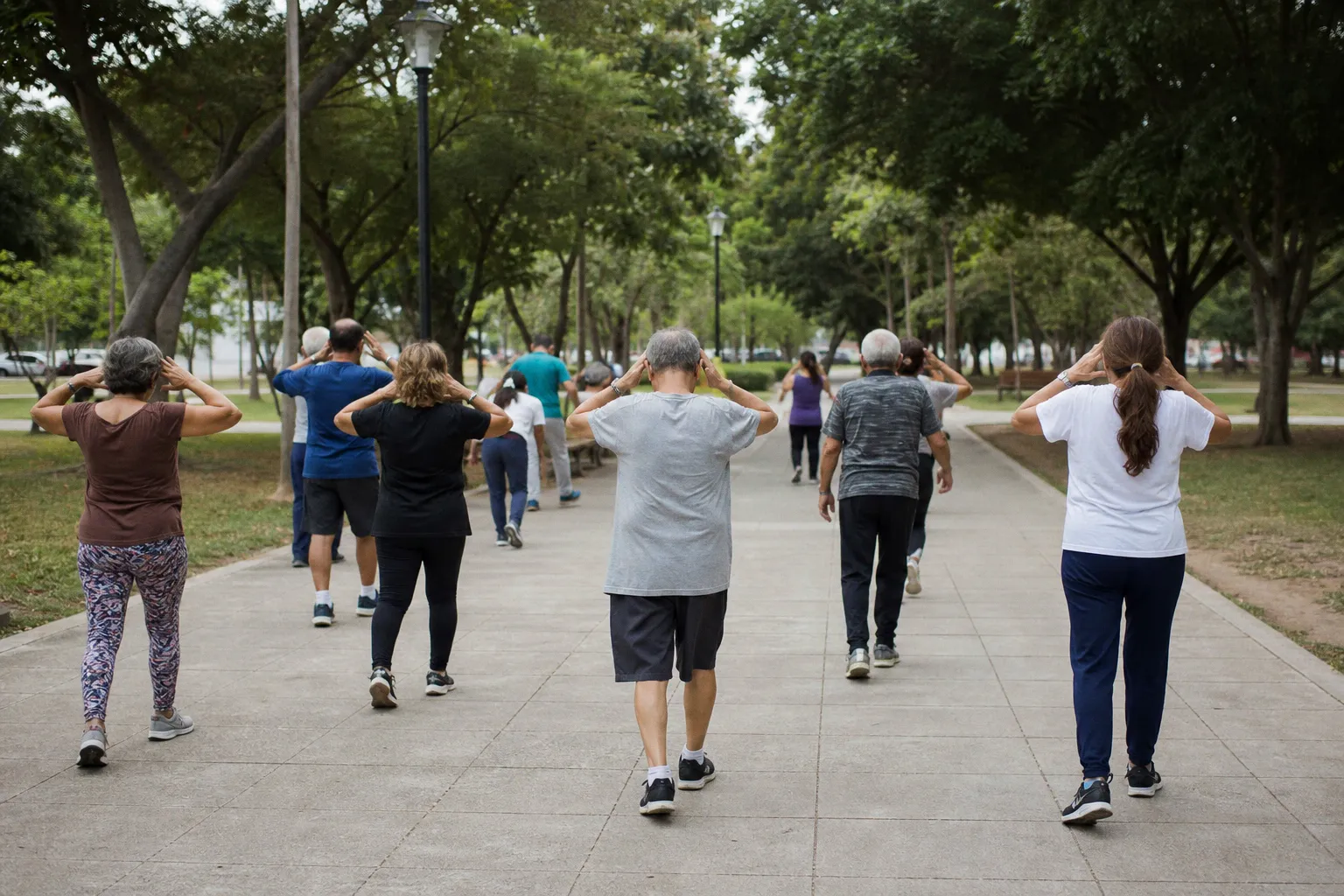
Two years is long enough to expose a weak lifestyle protocol. LatAm-FINGERS, an Alzheimer’s Association-funded study presented at AAIC 2026 in London and online, reports cognitive benefits in older adults at risk for dementia across 11 Latin American countries. The signal matters because the intervention was not a copy-paste import: it was culturally adapted while preserving core domains such as physical activity, healthy eating, cognitive training, and social engagement.
The clinical signal: multidomain beats single-variable thinking
The study found improvements in memory, thinking, and overall cognitive function, with the strongest gains in participants receiving structured support and coaching. That last clause is not decorative. In cognitive-risk reduction, adherence is often the intervention.
LatAm-FINGERS builds on the U.S. POINTER trial and tests a practical question: can a dementia-risk reduction program survive outside the original health system, language, food environment, and social context? According to the reported findings, yes — if the program is adapted deliberately rather than merely translated.
The adaptation was granular:
- physical activity included familiar formats such as salsa, tango, and outdoor group exercise in public parks;
- nutrition counseling adapted the MIND diet to regional food traditions, using locally accessible foods including avocado, quinoa, açaí, aguaymanto, chia, and pumpkin seeds;
- materials were translated and culturally adapted;
- additional support was provided for participants with limited digital experience.
This is the non-glamorous layer where many “brain health” programs fail. Neuroplasticity does not care about branding. It responds to repeated exposure, metabolic context, social reinforcement, and task consistency. A protocol that cannot be executed in daily life has poor latency to failure.
What patients and clinics should verify before adopting the model
The headline is promising, but it should not be converted into a generic wellness product without scrutiny. The reported program was structured, coached, and multidomain. That is a different object from an app, a PDF meal plan, or a weekly lecture.
Before a patient or clinic treats this as a template, check three conditions.
First: intensity and support. The strongest gains were seen with structured support and coaching. If a local program removes coaching, it may be removing the adherence mechanism.
Second: cultural fit. Lucia Crivelli, the study’s lead author and principal investigator at Fleni in Buenos Aires, emphasized that the team did not simply translate the U.S. POINTER model into Spanish and Portuguese. Components were standardized where necessary and tailored where local food access, climate, technology access, and preferences required it.
Third: population match. The study included racial and ethnic diversity and a wide range of education and socioeconomic status. That increases relevance for underserved groups, but it does not mean every older adult has the same risk profile, mobility capacity, diet constraints, or cognitive baseline.
For clinics, the documentation burden should be clear: define inclusion criteria, measure cognition at baseline, track attendance, record physical activity exposure, document nutrition changes, and monitor whether cognitive training is actually performed. Without those data, “lifestyle intervention” becomes a label, not a protocol.
The wider dementia-risk context is converging, but not yet simple
Several adjacent reports point in the same behavioral direction. A recent report summarized by AOL and EatingWell said faster walkers had about a 50% lower risk of cognitive impairment compared with non-“super movers” in analyses of older adults, while also noting limitations such as possible confounding and smaller imaging subsets. Another report says neurologists are increasingly focused on ultra-processed foods as a major modifiable risk factor for cognitive decline, with attention shifting toward gut-related mechanisms.
These are not interchangeable claims. Walking speed may be a marker of systemic health as much as an intervention target. Diet signals can reflect access, education, stress, and environment. Multidomain programs are attractive precisely because cognition is not governed by one input.
For older adults at dementia risk, the measurable takeaway is narrow and useful: ask whether the program is structured, coached, culturally adapted, and tracked over time. If the answer is vague, treat the promise with skepticism.
Performance fields already understand this distinction; elite athlete career profiles are never reduced to one workout or one meal. Brain health should be held to the same standard: repeated inputs, documented exposure, and outcomes measured rather than assumed.