The bird data challenge the “language required” assumption
The pivotal case is the 1998 Nature study by Nicola Clayton and Anthony Dickinson at Cambridge University. Western scrub jays remembered three variables about cached food:
- what food they had hidden;
- where they had hidden it;
- how long ago the caching occurred.
The behavioral consequence mattered. The birds adjusted retrieval based on whether the food would have spoiled.
That distinction is not cosmetic. Learned cue-response behavior can be trained into many animals. Episodic-like memory requires integration: content, location, and time bound into a usable record. The jays could not describe an inner replay of the event. The behavior itself had to carry the evidentiary load.
This is where the human bias becomes visible. If a cognitive function requires verbal report to count, then nonverbal organisms are excluded by design. The scrub jay work forced a cleaner criterion: can the animal use stored event-specific information flexibly, without a present cue doing all the work?
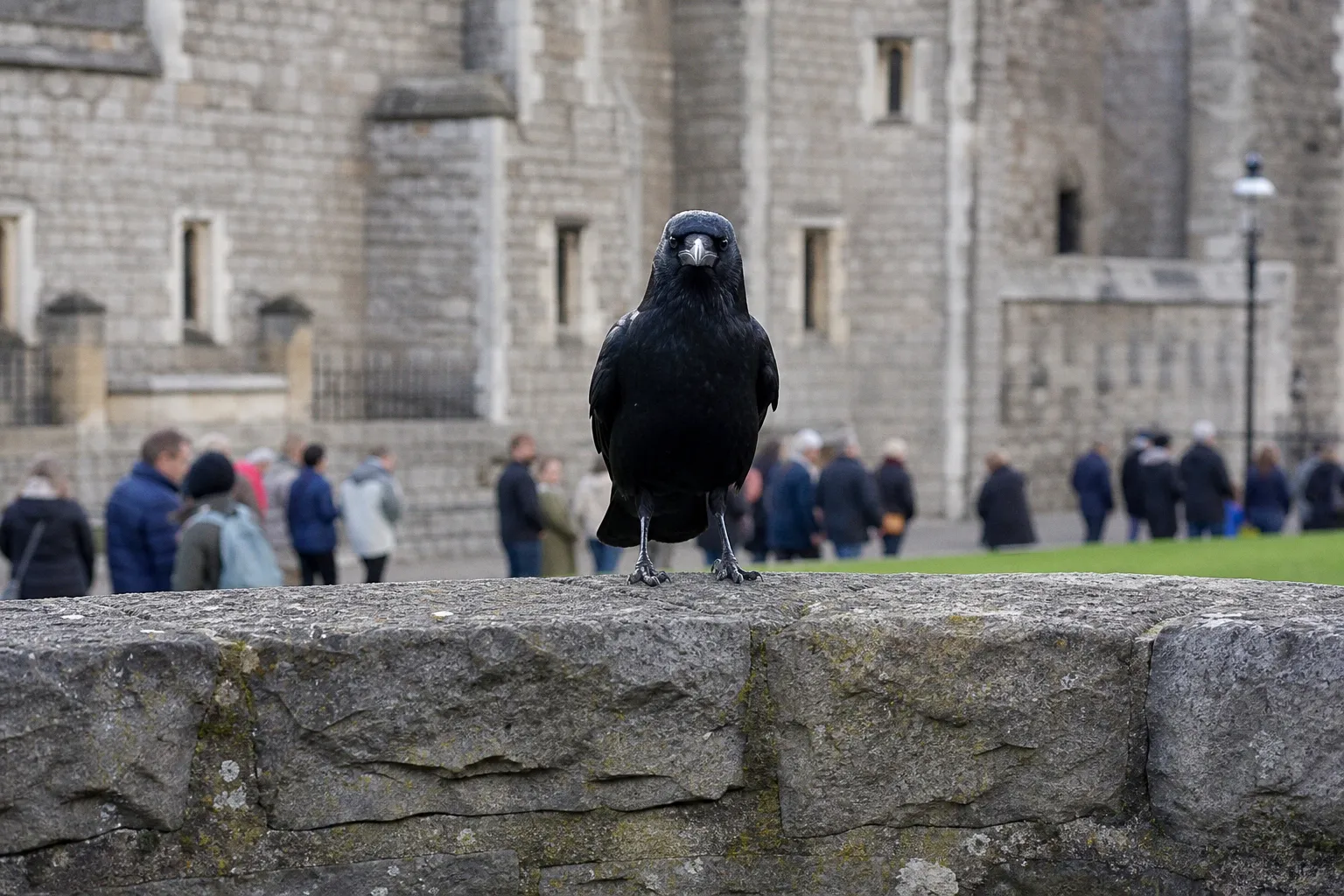
Corvid research then widened the aperture. Work by John Marzluff at the University of Washington found that American crows recognized individual human faces associated with capture and banding. Later, when researchers wore the same masks, crows dive-bombed and scolded them. The behavior persisted across years and spread to other crows that had not encountered the original threat.
That is not a simple reflex loop. It suggests stored social evaluation, retrieval across time, and transmission across individuals. For a field used to mapping complex social memory onto large mammalian brains, that is an uncomfortable data point.
Octopuses and bees break the brain-size model
Octopuses complicate the model from another direction. Their nervous system is not organized like a mammal’s. Roughly two-thirds of an octopus’s 500 million neurons sit in the arms rather than the central brain, and each arm can process information and execute responses semi-independently.
A 2021 study from the Hebrew University of Jerusalem reported REM-like sleep cycles in octopuses, with rapid color changes across the skin. The interpretation offered in the source is that these changes may suggest active memory consolidation, a process also associated with sleep in humans and other mammals.
The constraint is severe: most octopus species live one to two years. If their memory system supports fast learning and efficient storage, it is doing so under a compressed life-history schedule. That does not prove equivalence with human cognition. It does weaken the assumption that sophisticated memory requires mammalian architecture or long developmental timelines.
Honeybees push the argument further. With fewer than a million neurons and no hippocampus, they can learn to associate symbols with quantities, according to 2019 research from RMIT University in Melbourne. They can also recognize individual human faces, navigate using landmarks from a single flight, and communicate food-source location through the waggle dance, which encodes distance and direction.
The key technical point: comparable functions can emerge from different neural substrates. Spatial memory in vertebrates is often discussed through the hippocampus. Bees do not have one. Yet they still solve spatial and symbolic tasks relevant to survival.
What this means for human cognition research
The practical implication is methodological, not sentimental. Animal memory findings are pushing cognitive science away from a single ladder model, where humans sit at the top and other species are measured by proximity to us.
A better frame is functional architecture:
- What information is encoded?
- How long is it retained?
- Under what conditions is it retrieved?
- Can it be generalized or transmitted socially?
- What neural system supports the behavior?
That frame is also useful when thinking about human cognitive performance. Memory is not one thing. It is event binding, salience tagging, retrieval latency, sensory input quality, social context, and consolidation. The AOL report on hearing aids and memory, while focused on human aging rather than animal cognition, points to the same systems logic: when auditory input degrades, the brain spends more effort decoding speech, leaving fewer resources for storage, attention, and recall.
One cited study followed 56 adults with age-related hearing loss, average age 73, after hearing-aid fitting. Mini-Mental State Examination scores rose from 23.4 to 24.8 after six months, and verbal fluency increased from 11.0 to 14.3. That does not make hearing aids a universal memory intervention. It does support a narrower claim: cognitive output depends on upstream signal quality and processing load.
The measurable takeaway is strict: do not treat memory as a storage box inside the skull. Treat it as an adaptive system. Across jays, crows, octopuses, bees, and humans, the data keep pointing to the same principle: cognition is constrained by architecture, but not dictated by the architecture we expected.