This is where EEG and neurofeedback becomes clinically interesting. Not because it offers a magic reset, and not because every struggling brain needs a device attached to it, but because it gives us a rare kind of mirror: real-time information about brain activity, translated into feedback a person can learn from. In Leo’s case — a 10-year-old boy described in a MacKillop Family Services clinical case study — that mirror became part of a year-long process of change. Over 30 neurofeedback sessions, his emotional outbursts and risk-taking behaviors reduced significantly, while he also learned to better manage symptoms connected with epilepsy.
That sentence is easy to read quickly. In practice, it represents something much slower: repeated sessions, careful observation, a child learning body-based control before he could fully explain it, and adults resisting the urge to demand immediate transformation.
What EEG and neurofeedback are actually training
Neurofeedback is often described as “brain training,” which is useful as a first doorway and a little misleading if we leave it there. We are not training the brain like we train a muscle in a gym. We are using feedback to help the brain notice and gradually shift its own patterns.
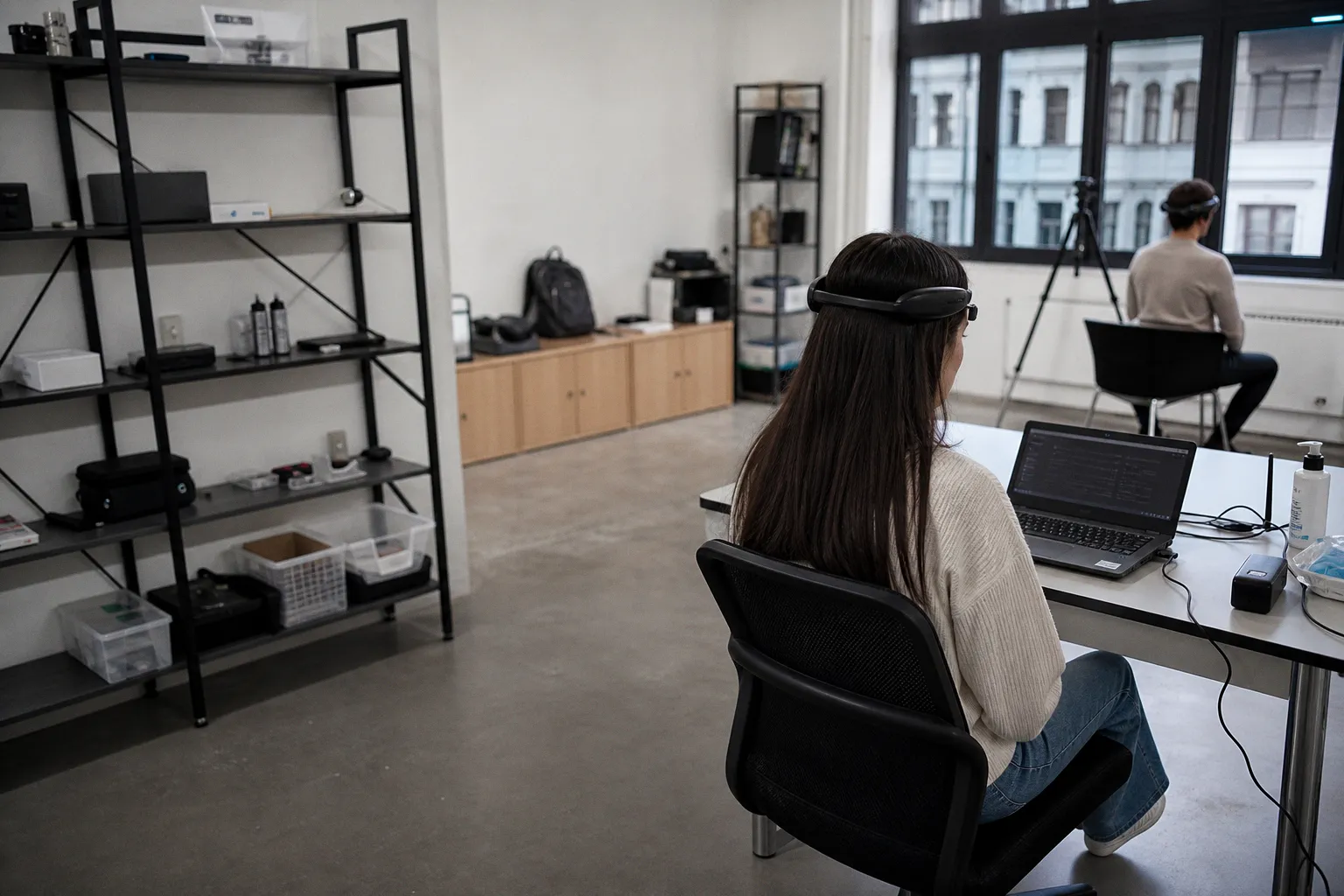
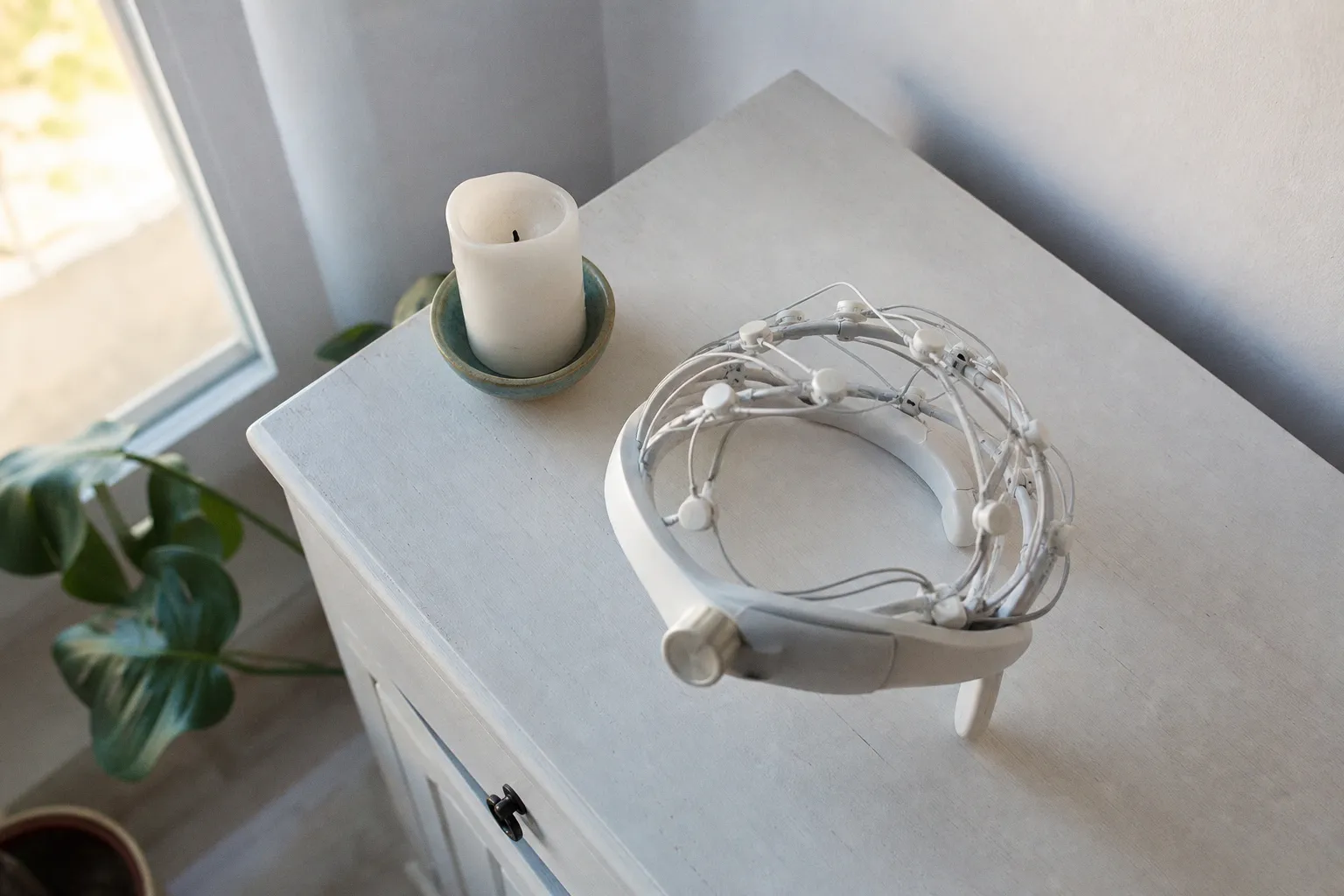
The foundation is EEG: electroencephalography. Sensors placed on the scalp detect electrical activity produced by groups of neurons. This does not read thoughts, memories, intentions, or private images in the mind. It records patterns of electrical activity — rhythms that can be separated into frequency bands such as delta, theta, alpha, beta, and gamma.
In EEG neurofeedback training, those signals are processed in real time. The person might watch a game, animation, video, or sound display that changes depending on whether their brain activity is moving toward a target pattern. When the desired pattern appears, the system rewards it: the video may brighten, the game may move forward, or the tone may become smoother. When the pattern drifts away, the reward pauses.
This is operant conditioning, though the phrase can sound colder than the experience. Operant conditioning simply means that behavior changes through feedback and reinforcement. In this case, the “behavior” is not a conscious action like pressing a button. It is the brain’s electrical activity. Over time, with repetition, the nervous system may learn to spend more time in states associated with steadier attention, calmer arousal, or better self-regulation.
Neurofeedback is not asking a child to “calm down.” It is giving the nervous system information it can learn from.
That distinction matters. Many children with trauma histories have already been told to calm down more times than anyone can count. Often, they have tried. Their difficulty is not a lack of caring. It is a regulation problem, and regulation begins below the level of moral instruction.
For adults, the same principle applies. If you have ever known you were safe but still felt your body bracing, or understood logically that an email was not a catastrophe but still felt your chest tighten, you already know the gap between insight and nervous-system learning. EEG and neurofeedback tries to work inside that gap.
The mechanics: how operant conditioning reaches brainwaves
A useful way to understand neurofeedback is to separate three layers: measurement, feedback, and learning.
First, the system measures brain activity through EEG sensors. Second, software translates selected aspects of that activity into a feedback signal. Third, the person’s brain begins to associate certain internal states with the reward.
The frequency bands matter because they are linked, broadly, to different kinds of brain states:
| EEG frequency band | Common association in training contexts | Why clinicians may pay attention to it |
|---|---|---|
| Delta | Very slow activity, often linked with deep sleep or under-arousal depending on context | Excess slow activity in waking states may be relevant in some attention or regulation profiles |
| Theta | Drowsiness, internal focus, memory processing, but also distractibility in some patterns | Some protocols aim to reduce excessive theta when attention is poor |
| Alpha | Relaxed wakefulness, sensory quieting, flexible calm | Training may support a more settled but alert state |
| Beta | Active thinking, focus, task engagement | Certain beta ranges may be reinforced for attention, while excessive fast activity can be monitored carefully |
| Gamma | Higher-frequency processing, integration, complex cognitive activity | Still an evolving area in applied training and research |
We should hold these associations gently. Brainwaves are not personality labels. A high-theta pattern does not mean a person is “lazy.” Fast activity does not automatically mean “anxious.” The clinical meaning depends on age, symptoms, location on the scalp, task conditions, medication, sleep, neurological history, and the person sitting in front of us.
That is why responsible eeg neurofeedback training is not a matter of buying a headset, choosing “focus mode,” and hoping the algorithm knows your life. Home EEG biofeedback devices may be useful for some people as part of relaxation or attention practice, but clinical neurofeedback — especially when trauma, epilepsy, ADHD, PTSD, or significant mood symptoms are involved — needs assessment, interpretation, and ongoing supervision.
The learning itself is often subtle. A person may not be able to say, “I increased my sensorimotor rhythm and inhibited high beta.” More likely, they notice that the screen responds when they stop forcing, when their breathing settles, when they become alert without straining. The nervous system is learning through experience rather than lecture.
This is one reason I encourage families to avoid judging early sessions too quickly. Some people feel tired afterward. Some feel calmer. Some feel nothing obvious at first. In careful practice, we track patterns across sessions: sleep, emotional recovery time, outbursts, attention span, headaches, seizures when relevant, medication changes, and stressors at home or school.
Mapping the mind: why 19-channel qEEG can change the conversation
Before training begins, many clinicians use quantitative EEG, often called qEEG or brain mapping. A typical qEEG setup records current brain activity through 19 channels. That gives a wider view than a single sensor placed on one part of the scalp.
The purpose is not to produce a dramatic “map of the soul.” It is to compare patterns of electrical activity across brain regions and frequencies, then interpret those patterns in relation to the person’s symptoms and history. In a well-conducted assessment, qEEG is one piece of the formulation, not the whole person reduced to colors on a screen.
A 19-channel qEEG can help a clinician ask better questions:
1. Where is slow-wave activity unusually prominent for this person’s age and presentation? This may matter when attention, fatigue, learning difficulties, or under-arousal are part of the picture.
2. Are there patterns of excessive fast activity that align with hyperarousal, sleep disruption, or chronic tension? This is especially relevant when the body seems to remain on guard long after danger has passed.
3. Are the patterns diffuse or localized? A broad regulation issue may call for a different approach than a more specific pattern tied to attention, sensory processing, or emotional reactivity.
4. Is there neurological complexity that requires medical coordination? With epilepsy, this is not optional. Neurofeedback should sit alongside medical care, not compete with it.
5. Do the EEG findings fit the lived story? If the brain map says one thing and the person’s symptoms say another, we slow down. Data should deepen curiosity, not shut it down.
This is where digital health can either mature or become noisy. Brain data is compelling; it can also seduce us into overconfidence. A responsible clinician remembers that EEG is a signal, not a verdict. We use it to anchor treatment decisions, but we keep listening to the person and the family.
In Leo’s situation, the case study does not publicly specify the exact protocol or frequency bands used across his 30 sessions. We should not fill that gap with invented certainty. What we can say is that neurofeedback was used as a supportive training tool for a child with trauma history and epilepsy, and that after completing the program over a year, he showed meaningful reductions in emotional outbursts and risk-taking behaviors.
That is enough to take seriously, and not enough to generalize recklessly.
Leo’s journey: what changed over 30 sessions
Leo was 10. He had a history of trauma and epilepsy. Those two facts alone tell us that his difficulties were unlikely to be solved by better discipline charts or more enthusiastic advice. Trauma can tune the brain toward threat detection; epilepsy involves abnormal electrical activity in the brain. Together, they require care that respects both emotional and neurological vulnerability.
The MacKillop Family Services case study describes Leo completing 30 neurofeedback sessions across a year. Over that period, his emotional outbursts and risk-taking behaviors reduced significantly. He also managed epilepsy symptoms more effectively.
We need to be precise about the language here. This does not mean neurofeedback “cured” his epilepsy. It does not mean every child with trauma will respond the same way. It does not mean 30 sessions is a universal prescription. What it does suggest is that, for Leo, repeated EEG-based feedback was associated with better self-regulation in real life — the kind that families actually feel in the kitchen, the classroom, the car, and the moments after disappointment.
A brainwave training case study is most useful when we look beyond the headline result and ask what kind of change may have been unfolding.
For a child like Leo, progress might show up as:
- A longer pause between trigger and reaction. Not perfect calm, but a few extra seconds in which the nervous system does not immediately leap into danger mode.
- Shorter emotional storms. An outburst may still happen, but recovery becomes faster and less costly.
- Less sensation-seeking or risk-taking behavior. When the brain is not constantly under- or over-aroused, it may not seek the same intensity to feel regulated.
- More tolerance for ordinary frustration. Homework, transitions, correction, and waiting can become less explosive.
- Better collaboration with adults. Not because the child has become compliant in some simplistic way, but because the body is less trapped in defense.
For many families, these are the changes that matter. They do not always look dramatic from the outside. They may look like a child leaving a room instead of throwing something, accepting help five minutes sooner, sleeping more predictably, or returning to school after a difficult morning.
The real outcome is not a prettier EEG trace. It is a life with fewer moments hijacked by alarm.
That is also why I am cautious with the phrase neurofeedback for focus. Yes, focus can improve for some people when arousal regulation improves. But focus is rarely just focus. A child who cannot concentrate may be anxious, sleep-deprived, traumatized, neurologically dysregulated, bored, overwhelmed, hungry, ashamed, or all of the above. The EEG gives us useful data; it does not excuse us from understanding the whole child.
What clinical evidence can and cannot tell us yet
The evidence base for neurofeedback is uneven, and we do our readers no favors by pretending otherwise. Some areas have more research momentum than others. Some protocols are better studied. Some commercial claims move faster than the science.
At the same time, it would be equally unhelpful to dismiss neurofeedback as a gadget simply because it sits at the intersection of therapy and technology. Real-time feedback from the brain is a serious clinical idea. The question is not “Does it work?” in the abstract. The better questions are: for whom, under what protocol, compared with what alternative, measured by which outcome, and sustained for how long?
A newer area involves real-time EEG-derived amygdala neurofeedback, including systems designed for PTSD treatment. A 2026 retrospective case series on Prism, a real-time EEG-derived amygdala neurofeedback approach for PTSD, reported a 75.0% treatment completion rate and an 85.7% clinically significant improvement rate, with a reported effect size of Cohen’s d = 2.03. Those numbers are striking, but we should read them in context: a retrospective case series can generate important clinical signals, yet it is not the same as a large randomized trial with long-term follow-up.
Still, the direction is meaningful. The amygdala is deeply involved in threat detection and emotional salience. In PTSD, the problem is not that a person is “too sensitive” in a characterological sense; it is that the threat system has learned, often for understandable reasons, to fire rapidly and intensely. A training system that helps people receive feedback connected to amygdala-related activity may offer a new route into regulation — especially for those who struggle to access calm through talk alone.
Here again, we need both hope and discipline. Neurofeedback may be a valuable adjunct to trauma therapy, skills training, medication, sleep stabilization, family support, and school accommodations. It should not be sold as a stand-alone cure for PTSD, epilepsy, autism, or any complex condition. Brains learn in relationships, environments, routines, and bodies — not only through screens.
The future of targeted frequency training
The next phase of EEG and neurofeedback will likely be more targeted, more portable, and more contested. We already see a widening split between clinical neurofeedback systems, consumer wearables, home EEG biofeedback tools, meditation headbands, focus apps, and digital therapeutics pursuing formal regulatory pathways.
This is exciting, but it asks us to become better interpreters of claims.
A home device that gives simple feedback during breathing practice is not the same as a clinician-guided protocol for a child with epilepsy. A focus headset marketed to students is not equivalent to qEEG-informed training for trauma-related dysregulation. A wellness app may be helpful and still not be a treatment.
The future I trust is not the flashiest one. It is the one where neurotechnology becomes more integrated with careful psychological formulation. That means:
- Better matching between symptoms and protocols. Not every attention problem needs the same training target.
- More transparent reporting of adverse effects. If some people become irritable, fatigued, headachy, or sleep-disrupted, we need to know when and why.
- Clearer long-term data. Immediate improvement is encouraging, but we still need stronger evidence about how long benefits last across larger groups.
- Medical collaboration for neurological conditions. Especially with epilepsy, neurofeedback should be coordinated with appropriate healthcare providers.
- Less hype around consumer neurotech. Home tools can support self-awareness, but they should not be positioned as substitutes for clinical care when symptoms are significant.
There is also a deeper clinical issue: we must not let technology narrow our empathy. When a brain map shows dysregulation, we are not discovering that someone is broken. We are seeing one layer of how they have adapted, struggled, protected themselves, or been shaped by stress and biology. The device may be modern; the therapeutic task remains human.
How to think about neurofeedback if you are considering it
If you are considering neurofeedback for yourself, your child, or a client, the first step is not to ask whether the technology is impressive. It is to ask what problem you are trying to change in daily life.
Is the target emotional outbursts? Panic physiology? Attention drift? Sleep onset? Trauma triggers? Recovery after stress? Seizure-related support alongside medical care? A vague goal like “optimize the brain” is difficult to measure and easy to market. A grounded goal can be tracked.
A careful process usually includes a clinical history, symptom measures, discussion of medical and psychiatric factors, and often qEEG assessment. The clinician should be able to explain why a particular protocol is being used, what changes they expect to see, how progress will be measured, and what signs would lead them to adjust or stop.
The relationship matters too. Neurofeedback can look technical from the outside, but the person delivering it still needs judgment, warmth, and the capacity to notice when a nervous system is being pushed too hard. Especially with children, the session is not only about data. It is about safety, pacing, consent, and helping the child feel mastery rather than scrutiny.
Leo’s story is powerful because it gives shape to what this work can look like when it is patient and applied. Thirty sessions over a year is not a quick hack. It is repetition. It is the nervous system being offered feedback again and again, until new patterns have a chance to become more available.
For some people, that may be a useful part of care. For others, the better first move may be sleep treatment, trauma-focused therapy, medication review, occupational therapy, family support, reduced stress load, or a combination of these. Good neurotechnology should help us choose more wisely, not rush us toward the newest device.
What Leo’s case teaches us about retraining the brain
Leo did not retrain his brain by being told to try harder. He was given a structured way to receive feedback from his own neural activity, and over 30 sessions, that training was associated with meaningful improvements in behavior and regulation. For a child carrying trauma and epilepsy, that is not a small thing.
The broader lesson is not that EEG and neurofeedback is the answer for every dysregulated brain. The lesson is more grounded: when we can measure patterns carefully, feed information back safely, and repeat the process with patience, the brain may learn new routes into steadiness.
If you take one micro-habit from this today, let it be this: choose one daily moment when your nervous system typically surges — opening email, getting your child out the door, starting homework, preparing for sleep — and track only the first 30 seconds. Notice your breath, jaw, shoulders, and impulse to rush. Do not force calm. Simply give your brain accurate feedback: “This is activation; I can observe it before I act.” That small act is not neurofeedback in the clinical sense, but it begins the same respectful process: helping the nervous system notice itself, one repeatable signal at a time.