Brain Computer Interface Technology: One User’s Hard Choice
Your brain produces data; a device turns that data into agency.
The failure mode is much less clean. What happens when that device works, becomes woven into a person’s daily sense of safety, and then the company behind it disappears?
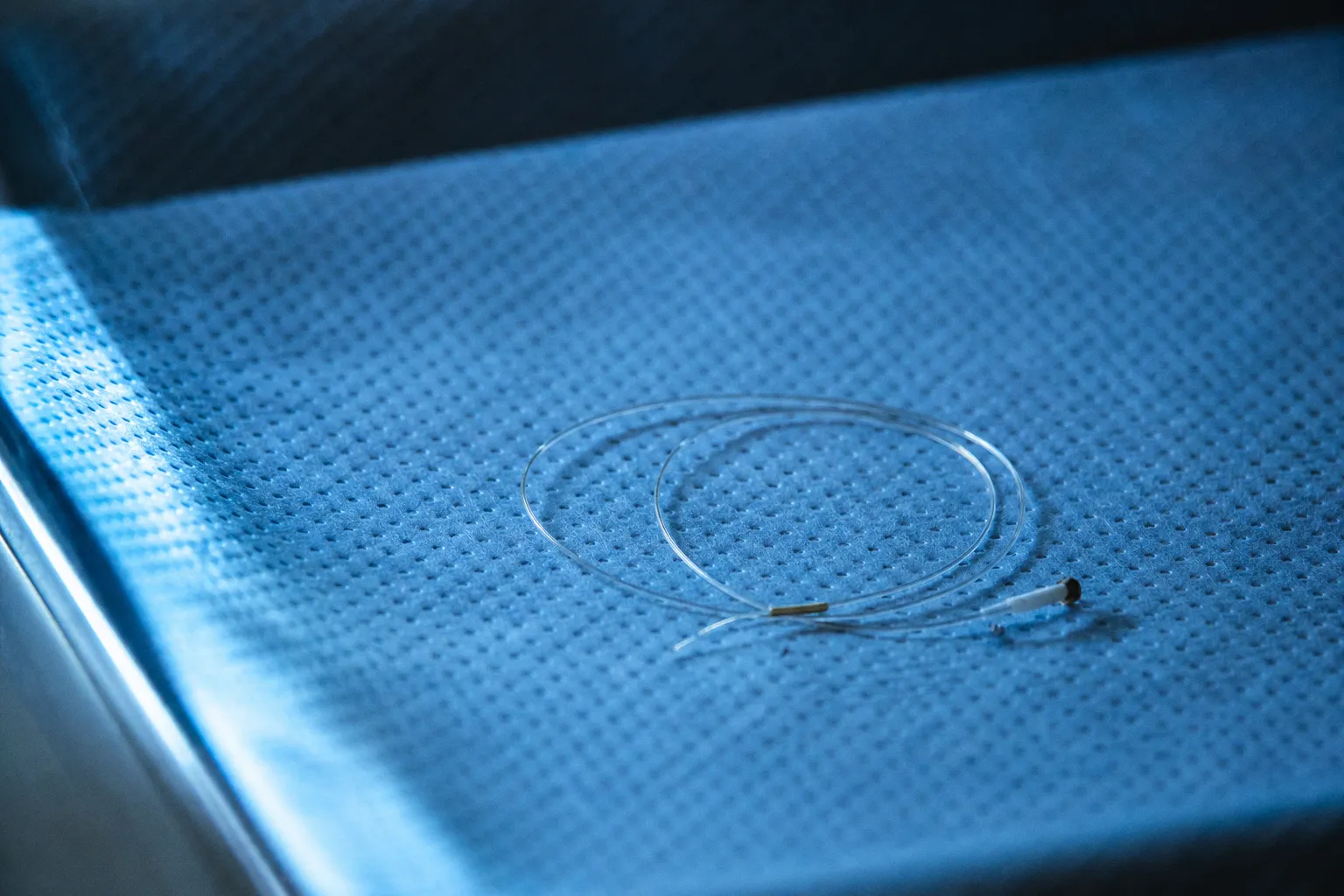
For Rita Leggett, an Australian woman with severe epilepsy, that was not a speculative ethics-panel question. In late 2010, at age 49, she received an experimental NeuroVista implant as part of a trial at Royal Melbourne Hospital. The system monitored neural signals associated with seizures and warned her when one was likely. Before the implant, she averaged roughly three seizures a month. With it, she was able to take preventive medication in time and went to zero.
Then NeuroVista went bankrupt in 2013. The trial ended. The implant had to come out.
That story exposes the part of neurotechnology that product demos quietly step around: an implant is not an app subscription you can cancel. It is hardware inside a person, entangled with clinical routines, software, specialized maintenance, and a company’s continuing existence. If one layer vanishes, “ownership” becomes a strangely inadequate word.
When an experimental device stops being experimental
There is a habit in technology culture of treating adoption as a moment: buy the device, accept the terms, start using the feature. That heuristic works tolerably well for a smartwatch. It fails when the technology is monitoring electrical activity in your brain.
Leggett had lived with epilepsy since she was three. The NeuroVista system was not merely generating an interesting chart. It changed the practical architecture of her life. A seizure warning could mean medication before the crisis. It could mean fewer cancelled plans, less dependence on others, less time organizing the day around the possibility that the day might suddenly end on the floor.
That is what “clinical benefit” means outside a slide deck. Not novelty. Reduced uncertainty.
The 2010 Australian NeuroVista trial enrolled 15 patients, and the outcomes were not identical. That distinction matters: one participant’s dramatic result should not be repackaged as proof that every participant became seizure-free. But Leggett’s result was powerful enough to reveal a deeper problem. A device can be investigational in regulatory language while becoming indispensable in a person’s actual life.
The moment a brain device changes how someone moves through the day, it has stopped being just a prototype to that person.
This is where the usual bci technology pros and cons framing becomes too neat. The “pros” column often lists restored capability, seizure prediction, communication support, or symptom management. The “cons” column lists surgical risk, cost, privacy, and imperfect accuracy. All true. But there is another category: continuity risk.
A clinical BCI is not a finished object. It is a dependency chain:
- implanted hardware that may need monitoring or eventual replacement;
- external equipment used to communicate with, charge, or calibrate the system;
- software that interprets neural signals;
- clinical teams trained to manage complications and adjust treatment;
- a manufacturer capable of maintaining all of the above.
The device under the skin may look permanent. The business supporting it usually is not.
Bankruptcy turned a medical benefit into a removal order
When NeuroVista collapsed, the company could no longer provide the maintenance infrastructure required for the trial. Leggett and her husband tried to keep the implant. They reportedly offered to buy the device and asked for intellectual-property rights to the software that made it usable.
Neither request could solve the central issue: an implanted system is not made safe by goodwill or possession. It needs technical support, validated software, and clinicians who can responsibly manage failures. Without those, leaving it in place may create one set of unknowns; removing it creates another certainty—another surgery, and the loss of a working intervention.
Leggett was required to undergo explantation despite wanting to keep the device. She described the experience as losing a piece of herself. Afterward came psychological trauma and a reduced sense of independence.
It is tempting to describe this as a sad but unusual edge case. That is the comforting version. It also assumes that companies producing advanced medical hardware are unusually stable because their products are serious. Financial markets have not agreed to that arrangement.
The device’s clinical value and the company’s balance sheet operate on separate clocks. A patient may need support for years or decades. A venture-backed company may need another funding round by next quarter. The mismatch is not a moral failure by an individual founder, clinician, or patient. It is a predictable design flaw in the system.
And predictable flaws deserve safeguards, not surprise.
The ownership question becomes absurdly complicated inside a skull
Patients are accustomed to owning or at least controlling the objects that make daily life possible: glasses, wheelchairs, glucose monitors, phones. Brain implants do not fit comfortably into those categories.
A patient may physically carry the device at every moment. That does not necessarily mean they control its software, the encrypted data it generates, the specialized tools needed to service it, or the intellectual property that makes it function. In a trial, the arrangement is even more contingent. The technology may be provided under research protocols rather than sold as a conventional medical product.
So when a company fails, several questions collide:
| Question | The intuitive answer | The real complication |
|---|---|---|
| Can the patient keep the implant? | “It is in their body.” | Continued use may require proprietary software, support equipment, and clinical oversight. |
| Can a hospital maintain it? | “A doctor implanted it, so the hospital can handle it.” | Many systems require manufacturer-specific expertise, updates, diagnostics, and parts. |
| Can the patient buy the technology? | “Just sell it to them.” | Ownership of hardware does not transfer software rights, safety validation, or a support network. |
| Is removal automatically safer? | “Inactive technology should come out.” | Long-term risks of unsupported retention versus explantation are not always straightforward or fully known. |
| Who decides when the trial ends? | “The user should decide.” | Research rules, liability concerns, safety standards, and corporate collapse can override preference. |
There is no universal, clearly protected right allowing patients to keep experimental implants when trials end or manufacturers fail. Nor is there a universally safe answer to leaving an unsupported device in the body. That legal and medical ambiguity is precisely the problem.
A person considering brain computer interface technology is often asked to consent to surgery, data collection, follow-up visits, and potential complications. They are less often asked to confront this blunt question: if the company disappears while the device is helping you, who has a plan for the next day?
That question belongs in consent materials, not in a post-bankruptcy meeting.
Neurotech’s orphan problem is bigger than one BCI trial
NeuroVista is not a singular historical malfunction. The same pattern has appeared across implantable neurotechnology.
Second Sight, maker of retinal implants intended to provide limited visual perception to blind users, went bankrupt in 2020. Its collapse left 352 patients with obsolete implants and uncertain access to repairs or support. The technology did not suddenly become irrelevant because the company’s finances did. The company simply stopped being able to sustain the ecosystem the technology required.
Autonomic Technologies, which developed an implant intended to regulate cluster headaches, also went out of business. Patients, including Markus Möllmann-Bohle, were left without the support structure they had relied on.
These cases differ in diagnosis, hardware, and clinical function. The shared mechanism is more important: companies sell—or trial—durable bodily dependencies through organizations that may be financially temporary.
This is the unglamorous side of brain machine interface risks. Public debate tends to focus on mind-reading, hacking, or whether a future employer will demand neural data. Those risks deserve attention. But a more immediate threat may be prosaic: an unsupported cable, an unavailable programmer, a defunct help line, a proprietary component nobody can replace.
The future rarely fails in the way people imagine. It fails through maintenance.
A brain implant does not become low-risk because the science is impressive. It becomes viable only when its support system can outlast the company pitch.
Cognitive enhancement has an even worse incentive structure
Medical neurotechnology at least has an obvious clinical rationale: reduce seizures, support movement, manage pain, restore a sensory function. The case for bci for cognitive enhancement is much thinner and, commercially, more vulnerable.
A consumer may be tempted by claims around focus, fatigue detection, meditation scores, stress tracking, or personalized cognitive training. Some wearable brain computer interface products use EEG sensors outside the skull rather than implanted electrodes. That changes the physical risk substantially: a headband is not brain surgery. It does not eliminate the behavioral and commercial problems.
Wearables can produce abundant data with uneven meaning. A dashboard can make a weak proxy feel like a diagnosis. An “attention score” may encourage people to optimize the score rather than the work, sleep, relationships, or treatment that actually determines cognitive health. This is the old Goodhart problem wearing a sleek sensor band.
Then comes abandonment risk at a lower, but still irritating, level. The device may continue physically working while its app loses updates, cloud features disappear, or subscription-gated analysis is shut down. Nobody needs a surgical procedure. They simply lose access to the product they thought they bought.
For an implanted medical BCI, that same dependency is amplified by orders of magnitude. The cognitive load does not belong with the patient. It belongs with the organization offering the intervention.
A reasonable decision framework is not “Do I trust this technology?” Technology is too broad a category to trust or distrust. Ask narrower questions:
1. What is the device actually doing for me that existing treatment cannot?
“More data” is not automatically more agency. A clinically meaningful benefit is specific: earlier seizure warning, improved communication, reduced symptom burden. A vague feeling of optimization is a poor trade for a durable dependency.
2. Which parts of the system are proprietary?
Hardware matters, but so do the software, charging equipment, data formats, calibration tools, and clinician interfaces. A closed system with no continuity plan has high friction the moment the vendor stumbles.
3. What happens at the end of the trial or product life?
Ask who pays for follow-up, maintenance, explantation if needed, and clinical management after the study. Ask whether the answer is written down. Verbal reassurance is not a continuity plan.
4. Who can service the device without the original manufacturer?
This is the question companies dislike because it exposes their moat. For patients, the moat can become a wall.
5. What decisions can I still make if the system stops functioning?
A device should not quietly erase backup routines: medication plans, family support, clinician contacts, non-device symptom strategies. Redundancy is not pessimism. It is engineering.
The psychological cost is not a footnote
There is a standard clinical vocabulary for removal: explantation, adverse event, end-of-study procedure. It is accurate and emotionally useless.
For someone like Leggett, the removal was not just the subtraction of a medical object. It meant losing a system that had altered the rhythm of daily risk. A person who has been able to act before a seizure may experience the return of uncertainty as a loss of bodily autonomy, even if the original condition itself has not changed.
This is one reason neurotech ethics cannot be reduced to surgical safety and informed consent forms. Devices that mediate perception, pain, movement, communication, or prediction can become part of how a person experiences their own competence. Remove the device, and the psychological impact may resemble bereavement more than a routine product recall.
The language of “attachment” can sound soft to people trained to think in outcomes and endpoints. It is not soft. It is operational. If a device changes how someone plans travel, accepts work, sleeps, leaves home, or relates to caregivers, it has changed their behavioral environment.
The user then adapts. Naturally. Humans are very good at normalizing a new baseline, especially a better one.
That is why regulators, trial sponsors, and manufacturers should treat offboarding as part of the intervention, not as paperwork after the intervention. If removal is possible, preparation for removal should begin before implantation. If continued access is impossible, that should be stated with painful clarity. If a company’s solvency is the single point of failure, then the product is not merely innovative. It is fragile.
The fail-safe belongs in the business model
None of this is an argument against brain computer interface technology. For people with severe neurological illness, the potential benefit is not abstract. A system that helps predict seizures, enables communication, or restores a measure of function may be worth risks that would be unreasonable for a healthy consumer chasing a better concentration score.
But the adoption standard should be higher than “the demo worked” and “the trial has approval.” Patients need a continuity architecture.
That could include escrowed software and technical documentation, funds reserved for post-trial support, independent clinical maintenance pathways, clear plans for removal or retention, and data portability that does not evaporate with a startup. These are not decorative ethics commitments. They are infrastructure.
The behavioral trap is obvious once you see it. People are invited to focus on the immediate gain because the immediate gain is visible: fewer seizures, less pain, a new ability. The future dependency is invisible, distant, and cognitively inconvenient. So it gets discounted. Everyone involved does this—patients, investors, hospitals, regulators, journalists. Humans are remarkably consistent that way.
The correction is not heroic vigilance. It is a default.
Before any implant enters a body, the default question should be: Who is responsible if this company is gone in five years and the device is still helping the person carrying it?
If nobody can answer that in operational detail, the technology is not ready for trust. It may be ready for a demonstration. Those are not the same thing.