A BCI brain computer interface, in functional terms, is a closed-loop system: neural acquisition, signal processing, decoding, and output. Each stage carries measurable latency, signal-to-noise constraints, and algorithm dependencies. The category label spans everything from implanted arrays to scalp electrodes, and the performance envelope varies by orders of magnitude across that spectrum.
The Spectrum of Neural Integration: Invasive, Partially Invasive, Non-Invasive
Three architectural classes dominate the field, each carrying distinct trade-offs in spatial resolution, invasiveness, and clinical risk.
| Parameter | Invasive (intracortical) | Partially Invasive (ECoG) | Non-Invasive (EEG headsets) |
|---|---|---|---|
| Electrode placement | Within cortical tissue | On the brain surface (under skull) | On the scalp |
| Spatial resolution | Single-neuron or small-population | Sub-millimeter columnar | Centimeter-scale cortical regions |
| Surgical risk | High (craniotomy, infection, glial scarring) | Moderate (craniotomy) | None |
| Signal-to-noise ratio | High | High | Low — attenuated by skull and scalp |
| Typical use case | Motor restoration, speech decoding | Epilepsy mapping, motor research | Consumer neurofeedback, focus training, research |
| Latency floor | Tens of ms | Tens of ms | 100–200 ms minimum for usable feedback |
| Regulatory pathway | FDA Breakthrough / Class III | FDA Class II / III | Often Class II if marketed for medical claims |
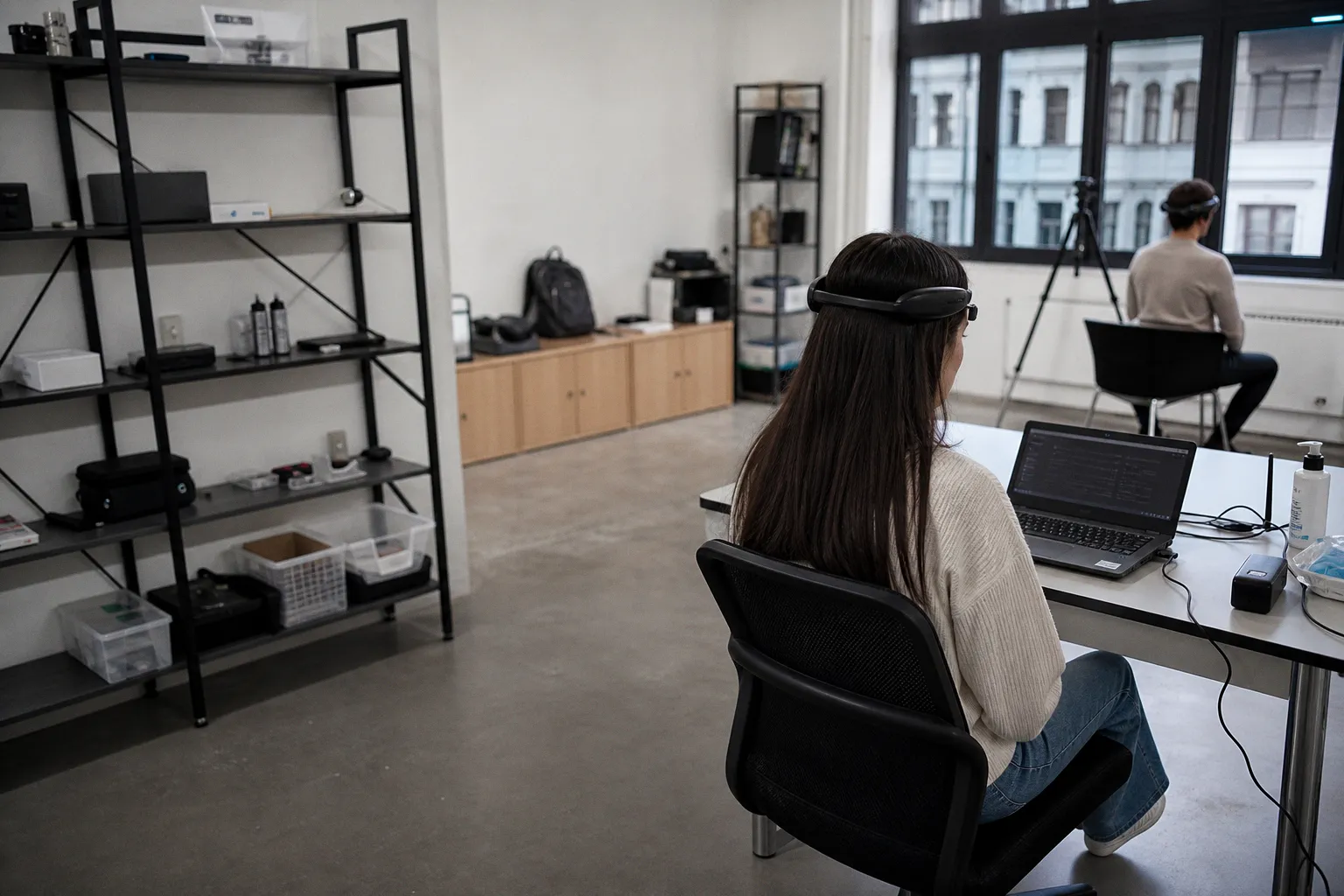
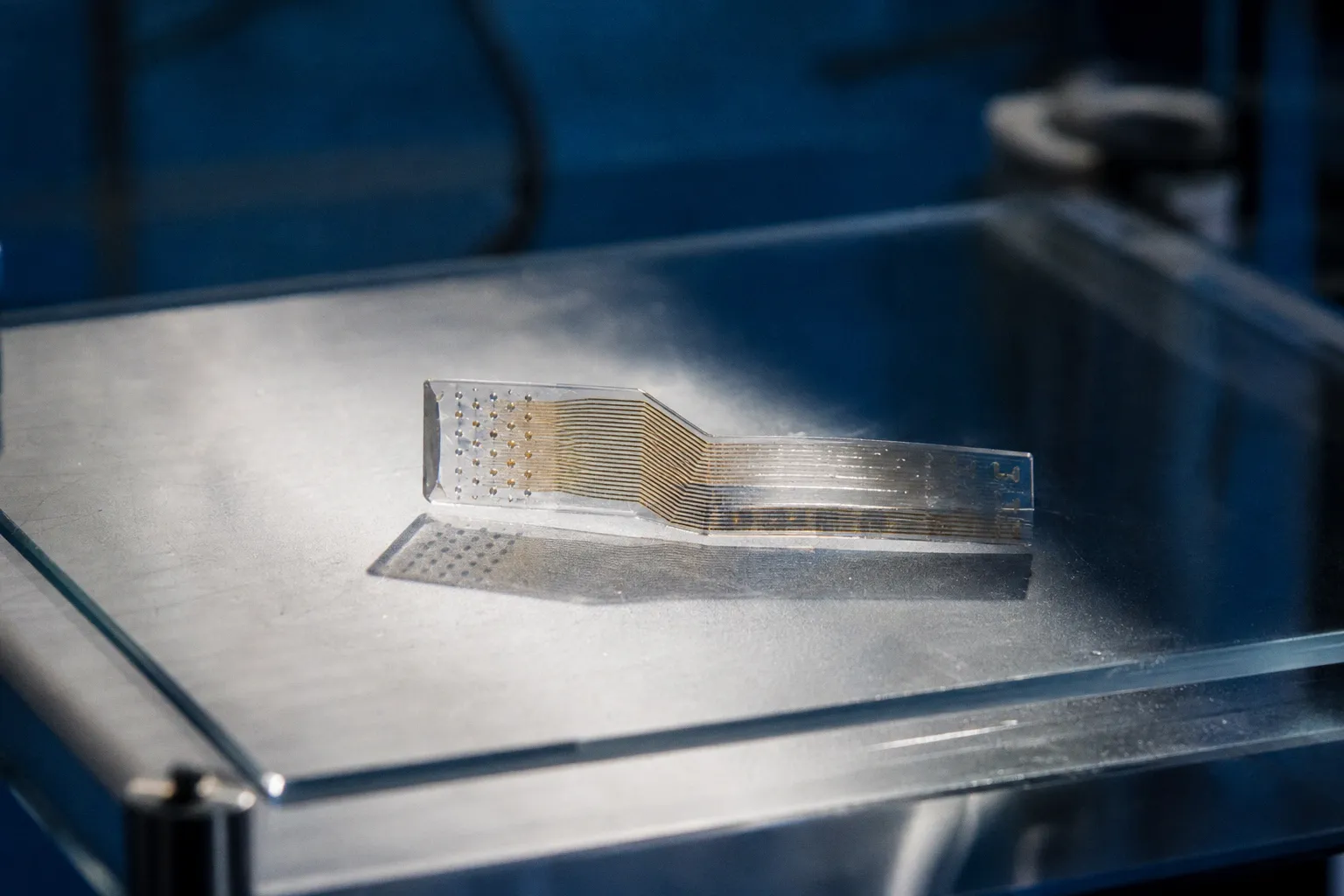
Neuralink's implant sits in the invasive column. Most consumer-grade EEG headsets sit in the non-invasive brain computer interface column. The partially invasive middle (electrocorticography, or ECoG) is dominated by clinical research platforms and pre-surgical mapping, with limited consumer exposure.
Signal quality is the upstream constraint. Every downstream claim a BCI manufacturer makes about cognitive enhancement is bounded by the SNR at acquisition. Without adequate signal fidelity, neurofeedback is noise dressed as insight.
How Brain Computer Interfaces Work: Decoding the Pipeline
BCI neural signals translation follows a consistent pipeline across classes, even when the sensor differs.
1. Acquisition. EEG electrodes detect summed post-synaptic electrical activity from large neuronal populations. Sampling rates for consumer devices typically run 250–500 Hz. Intracortical arrays sample at multi-kHz rates with single-unit resolution.
2. Preprocessing. Band-pass filtering (commonly 1–40 Hz for EEG), artifact rejection (eye blinks, muscle activity, electrode impedance drift), and common average referencing.
3. Feature extraction. Power spectral density across canonical bands — delta (1–4 Hz), theta (4–8 Hz), alpha (8–13 Hz), beta (13–30 Hz), gamma (>30 Hz). Event-related potentials and slow cortical potentials enter the feature set for specific paradigms.
4. Decoding. Classical machine learning (LDA, SVM) and increasingly deep learning architectures (CNN, transformer-based sequence models) map features onto output targets: cursor coordinates, letter selection, attention index, "focus score."
5. Output and feedback. Visual, auditory, or haptic feedback closes the loop. For effective neurofeedback, total system latency should remain below 100–200 ms; beyond that, the contingency between mental state and feedback degrades and learning efficacy drops.
The non-invasive case is the bottleneck. Skull and scalp attenuate and smear cortical signals, pushing SNR down by roughly an order of magnitude versus intracortical recordings. Consumer EEG compensates with aggressive signal processing — but the underlying signal remains a low-amplitude, high-contamination stream that resists clean interpretation outside controlled conditions.
From Clinical Breakthroughs to Consumer Neurofeedback
The clinical case for BCI is well-defined and largely reconstructive: restore function lost to injury or disease. The consumer case is murkier, and warrants a higher skepticism dial.
On the clinical side, Neuralink's 2024 breakthrough designation covers an implanted system for paralyzed patients — a population with a clear medical need and a measurable functional outcome (device control via thought). The reSET digital therapeutic, FDA-cleared in 2017 for substance use disorder, established a regulatory precedent for software-driven interventions. VR-integrated neurofeedback for PTSD and specific phobias operates in the same evidence-based lane, layering immersive exposure onto real-time physiological monitoring.
On the consumer side, the claims shift from restoration to enhancement: "improve focus," "reduce stress," "train your brain." The mechanistic plausibility is real — operant conditioning of neural oscillations has decades of empirical support — but the dose-response curve, session frequency requirements, and transfer effects to real-world cognitive performance remain under-specified for most retail products. A consumer-grade EEG headset is a signal acquisition tool. Whether the closed-loop protocol it ships with delivers a clinically meaningful change in attention regulation is an empirical question, and one that varies by device, software, and user adherence.
FDA clearance is a regulatory floor, not a performance ceiling. Class II designation tells you a device is substantially equivalent to a predicate device. It does not validate claims of cognitive enhancement.
Technical Hurdles: Signal-to-Noise Ratios and Latency
Two metrics determine whether a BCI functions as a measurement instrument or as a placebo wrapped in hardware.
- Signal-to-noise ratio (SNR). Non-invasive EEG competes with line noise (50/60 Hz), muscle artifacts, electrode-skin impedance variation, and environmental electromagnetic interference. Intracortical arrays avoid most of this but introduce chronic recording stability problems — micromotion, glial scarring, electrode degradation over months and years.
- Latency. Total loop latency — from neural event to feedback event — must remain below the perceptual threshold for contingency learning. For visual feedback, this means sub-200 ms end-to-end. For haptic or auditory feedback, slightly higher thresholds apply but the same principle holds. Consumer devices that push pre-processing to the cloud add tens to hundreds of milliseconds of network latency, often exceeding the budget before the user sees a single feedback frame.
The practical consequence: a consumer headset with a poorly tuned artifact rejection pipeline will deliver feedback that correlates with eye blinks and jaw clenching as readily as with cortical state. Algorithmic sophistication matters less than data hygiene at this layer. A model trained on contaminated features will inherit the contamination, regardless of architecture.
Regulatory Landscapes and Digital Therapeutics
The FDA classifies many neurofeedback and BCI-related devices as Class II medical devices when marketed for specific indications — ADHD, anxiety, insomnia. Class II requires 510(k) clearance, which establishes substantial equivalence to a legally marketed predicate device. It does not require de novo efficacy trials against an active comparator.
This creates a predictable asymmetry: consumer BCI devices marketed for general "wellness" or "focus training" can ship without 510(k), but cannot make specific medical claims. Devices that make medical claims must clear 510(k), but inherit the evidentiary standard of their predicate rather than producing novel efficacy data.
The digital therapeutics category — software as a medical device — overlaps directly. reSET's 2017 clearance established that a software intervention, with appropriate clinical trial backing, can be regulated and prescribed. The same pathway is open to BCI-driven therapeutics: closed-loop neurofeedback targeting a defined clinical endpoint, validated against an active comparator, with a pre-specified statistical analysis plan. The bottleneck is not regulatory access. It is the cost and complexity of running the trials that justify the claims.
Evaluating a BCI Claim: A Practitioner's Checklist
A short evaluation framework, applicable before any purchase, protocol adoption, or clinical integration:
- Sensor class and SNR. Intracortical, ECoG, or EEG? What is the published signal quality under real-world conditions, not lab benchmarks with aggressive artifact rejection?
- Total loop latency. End-to-end, from neural event to feedback. Sub-200 ms is the operational floor for effective neurofeedback. Anything above that needs justification.
- Decoding model transparency. Is the algorithm published, peer-reviewed, or proprietary? Black-box claims without disclosed architecture are a red flag for clinical interpretation.
- Regulatory status. FDA-cleared for a specific indication, registered as a wellness device, or neither? The category dictates what claims are legally permissible and what evidence was required.
- Evidence base for the protocol. Does the device ship with a neurofeedback protocol validated in a controlled trial? Or is the training paradigm ad hoc, with post-hoc rationale?
- Outcome metric. What is being measured, and does it transfer to the real-world cognitive or affective target the user actually cares about? A "focus score" that correlates with task performance in a published study is a different claim than one that doesn't.
The broader software layer — how the data is published, visualized, and integrated into daily workflows — is evolving in parallel with the hardware. The same transformation reshaping mainstream digital publishing toward AI-native, modular editorial infrastructure is redrawing how neurotech companies deliver their consumer experience, from real-time dashboards to adaptive protocol design. The BCI category will not be exempt from that shift.
The label "BCI" is identical across every product on the market. The underlying signal acquisition, decoding rigor, regulatory pathway, and evidence base are not. Treat the term as a starting point for due diligence, not a conclusion. The data — signal quality, latency budget, regulatory classification, trial evidence — is the only criterion that resolves whether a given device is a measurement instrument or an expensive placebo.