The clinic snapshot problem
Alzheimer’s trials have leaned heavily on clinician-administered instruments such as ADAS-Cog and the Clinical Dementia Rating scale. These measures are familiar, but the limitation is structural: they capture infrequent snapshots.
That matters in early Alzheimer’s disease, where the clinically meaningful change may be small, variable, and easily blurred by clinic stress, fatigue, scheduling gaps, or assessor variability. A single appointment can compress cognition into a thin cross-section. Home monitoring tries to widen that sampling window.
The NeuLogiq Platform is built around three linked measurement streams:
- dry-sensor EEG recorded with a wireless headset;
- tablet-based neurocognitive tasks with gamified elements;
- assessments spanning cognition, mood, speech, and sleep.
The premise is not that a home device “diagnoses” Alzheimer’s. The stronger, narrower claim is that frequent home-based measurement may support research by capturing day-to-day symptom variation with lower participant burden.
What CNS-101 actually showed
The CNS-101 study recruited participants from seven UK clinical sites. After one in-clinic training session, both people with mild Alzheimer’s disease and healthy controls were able to set up the EEG headset and complete tablet assessments at home without medical staff or technicians present.
Adherence was high, but not identical across groups:
- 88.8% in controls;
- 77% in the dementia group.
That gap is clinically important. It suggests usability is plausible, not frictionless. Participants with dementia reported lower confidence with the technology and had minor technical challenges during initial home setup.
The more useful number is session completion. Across the full 52 weeks, participants with dementia completed 99.7% of the sessions they started. In cognitive performance terms, this separates initiation burden from task tolerability. Starting may be the vulnerable step. Once engaged, participants largely finished.
Professor James Rowe of the University of Cambridge, principal investigator of CNS-101, framed the result as a move toward frequent, objective measurement of brain activity and cognition in the patient’s home. Brian Murphy, co-founder and chief scientific officer of Cumulus, emphasized that people with mild dementia — not only healthy volunteers — were able and willing to use the system unsupervised for a year.
That is the evidence boundary. The trial supports usability and adherence. It does not, from the information available here, establish that the platform changes treatment decisions, predicts individual decline, or replaces clinic-based assessment.
What a patient or clinic should check before saying yes
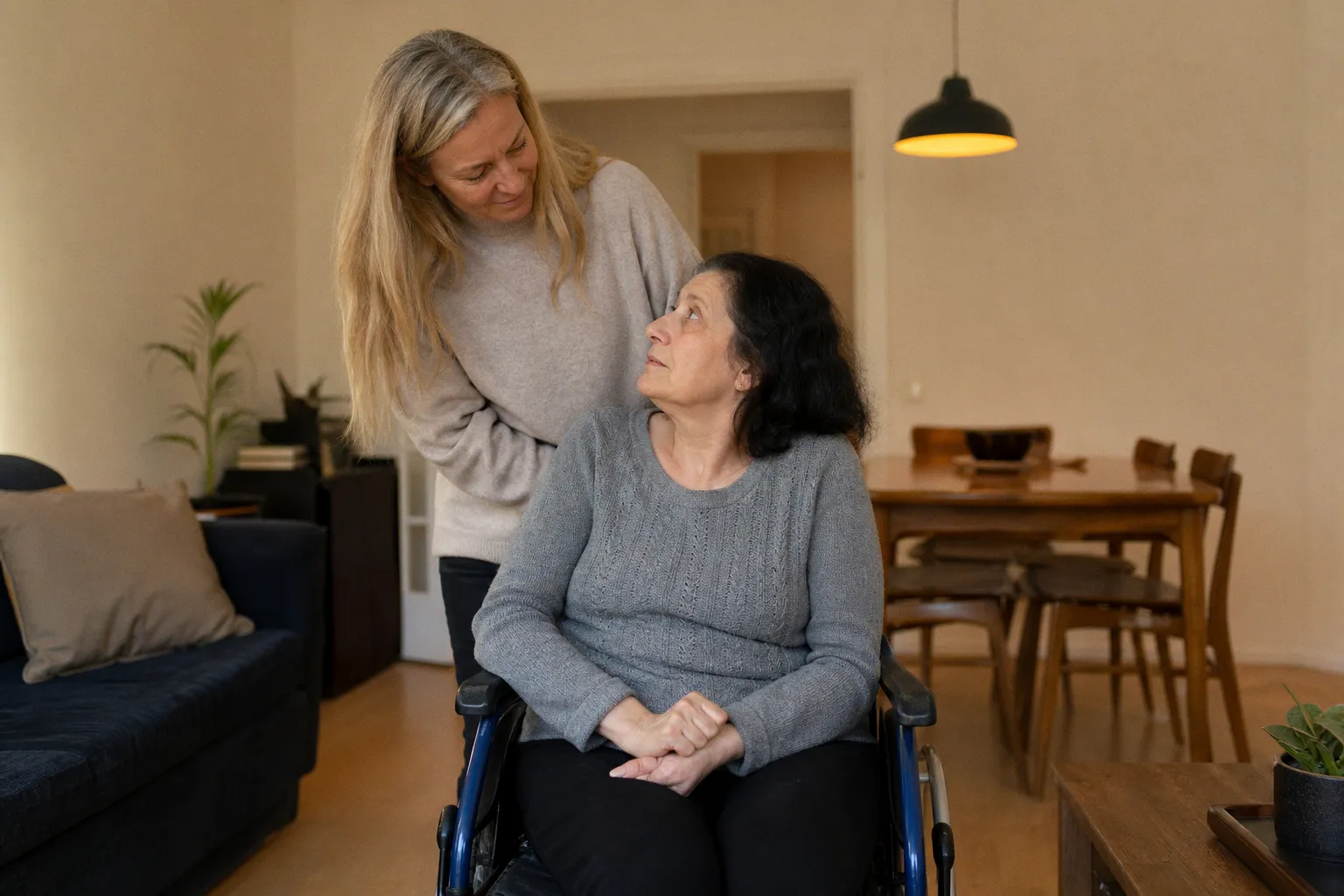
For patients and families, the practical question is not whether home monitoring sounds more humane than repeated clinic visits. It often will. The question is whether the protocol is precise enough to protect the person generating the data.
Before enrolling in a trial or adopting a similar monitoring workflow, check:
- what data are collected: EEG, cognitive-task performance, mood, speech, sleep, or all of them;
- how often assessments must be completed and what counts as a missed session;
- who provides technical support during home setup;
- whether a caregiver is expected to assist, and how that changes consent and burden;
- how fatigue, frustration, or failed setup attempts are recorded;
- who can access the raw and processed data;
- whether results are used for research endpoints, clinical decisions, or both.
The Nature item in the evidence cluster points to a related direction: mapping atrophy in preclinical Alzheimer’s disease to a network that predicts longitudinal decline. Only the title is available here, so the claim should stay narrow. The broader field is moving toward earlier, more sensitive markers of change — structural, cognitive, physiological, and behavioral.
Home EEG and tablet tasks fit that trajectory. They reduce latency between measurements. They may reduce the noise introduced by clinic-only testing. But the protocol must be judged like any other clinical measurement system: adherence, validity, patient burden, data governance, and failure modes.
The measurable takeaway: in CNS-101, people with mild Alzheimer’s disease sustained home-based EEG and cognitive assessments over 52 weeks with 77% adherence and completed 99.7% of sessions they began. That is not a treatment breakthrough. It is a credible operational signal that Alzheimer’s research can move part of its measurement stack into the home.