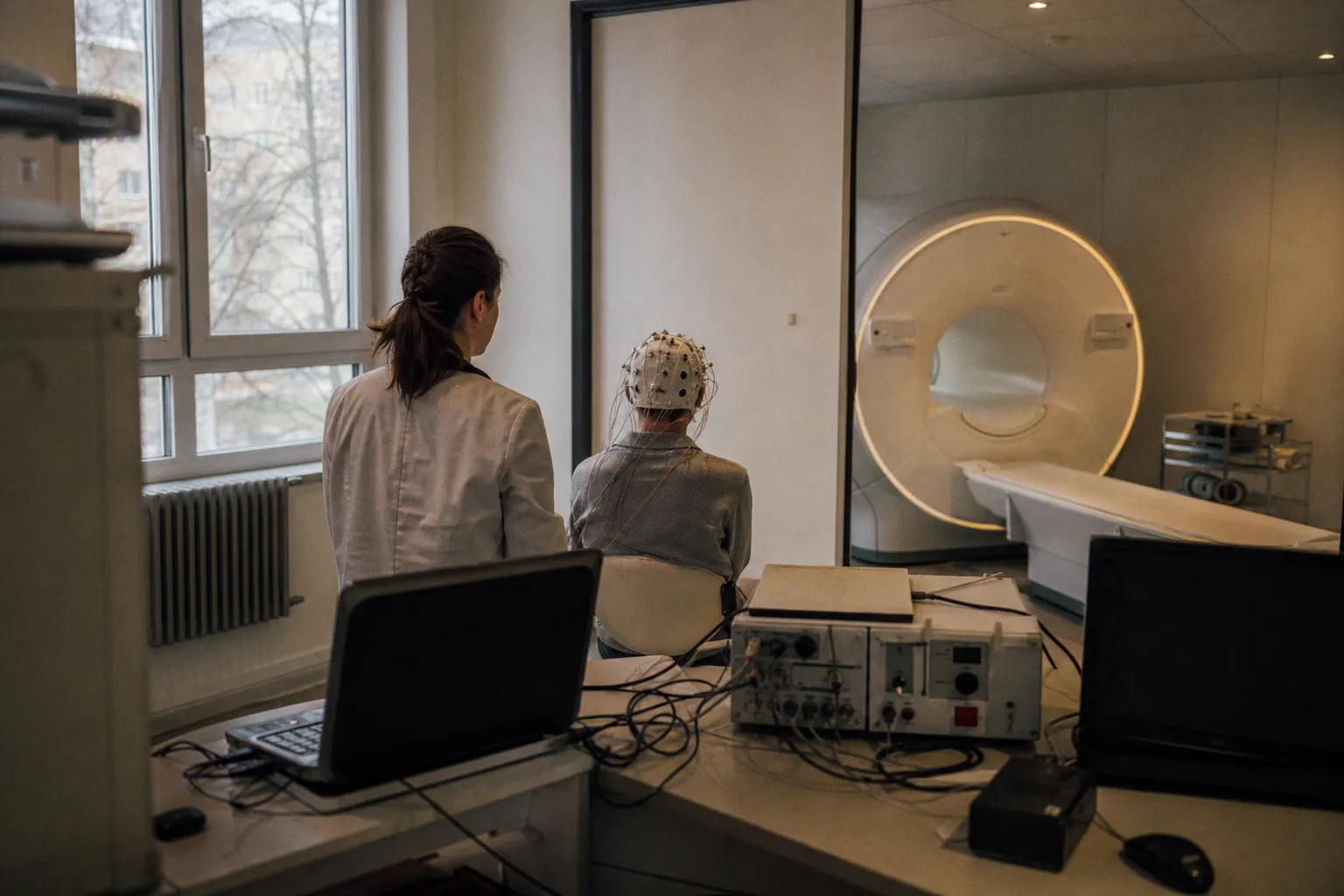
According to Vocal, renewed psychedelic research is asking a narrow but consequential question: can certain compounds temporarily loosen rigid patterns of brain activity, and under what therapeutic conditions might that matter? The article points to work around psilocybin, MDMA, LSD and ibogaine—but also acknowledges that the evidence is not settled. For anyone considering a clinic, that distinction is the starting point, not fine print.
Flexibility is a mechanism, not an outcome
The relevant concept is neuroplasticity: the adult brain can remodel in response to experience. That does not mean every intervention that changes subjective experience produces durable clinical benefit.
The source describes depression, chronic stress and trauma as conditions in which familiar patterns of neural activity can become easier to re-enter. Psychedelic studies are probing whether a temporary period of greater network flexibility could make those patterns less fixed. The operative word is could.
Particular attention has gone to the default mode network: a set of interacting regions involved in self-referential thought, introspection and mind-wandering. It is also associated with rumination. But the network is not a defect to suppress. It supports memory, imagination and a continuous sense of self. A commercially appealing claim that a treatment “resets” the brain is therefore not a clinical endpoint. It is a metaphor in search of a measurement.
Why expectation belongs in the assessment
A separate international analysis, reported by Informationsdienst Wissenschaft, combined brain-imaging data from 16 studies with 409 participants. Its central finding: verbal suggestions of pain relief and expectation reinforced through conditioning engage overlapping, but partly distinct, neural mechanisms.
That matters here because studies of psychedelic compounds have a built-in latency problem: participants may be able to infer whether they received an active substance. Blinding becomes difficult. A change in mood or symptom report can be meaningful, but it is not automatically proof that the compound alone caused a durable therapeutic shift.
The placebo finding does not invalidate psychedelic research. It raises the evidentiary threshold. Context, expectation, learning and the treatment framework are not background noise; they may be part of the observed effect.
Before treating a clinic’s claim as evidence
The available account says clinical trials have examined psilocybin in depression, substance-use disorders, PTSD and anxiety, while MDMA-assisted therapy has been studied for trauma-related conditions. It also notes modest trial sizes and unresolved questions about condition, dosing protocol and therapeutic framework.
A patient or client should therefore ask for documents rather than narratives:
- the exact compound and protocol being proposed;
- the evidence specific to the stated condition—not a general claim about “neuroplasticity”;
- how preparation, therapeutic support and follow-up are structured;
- what outcomes the provider measures after the acute experience, and for how long;
- the risks, exclusions and limits of the evidence in writing.
The measurable takeaway is simple: distinguish a transient alteration in experience from sustained improvement in function. Until research can consistently demonstrate the latter across well-controlled settings, “brain flexibility” remains a hypothesis under investigation—not a reason to outsource clinical judgment to marketing.