Compare MBSR and CBT Programs for Chronic Burnout Recovery
If you've been trying to figure out how to compare MBSR and CBT programs for chronic burnout without falling into a marketing trap, the answer sits in the architecture of each approach: what they ask of you, how long they take, and which dimension of your suffering they are actually designed to treat.
The Structural Divide: Eight Weeks of Mindfulness Education vs. Clinical Psychotherapy
The first thing you need to untangle is a quiet but consequential misconception. Despite often being grouped together as "talk therapies," MBSR and CBT operate under fundamentally different classifications, and understanding this distinction shapes how you experience the work.
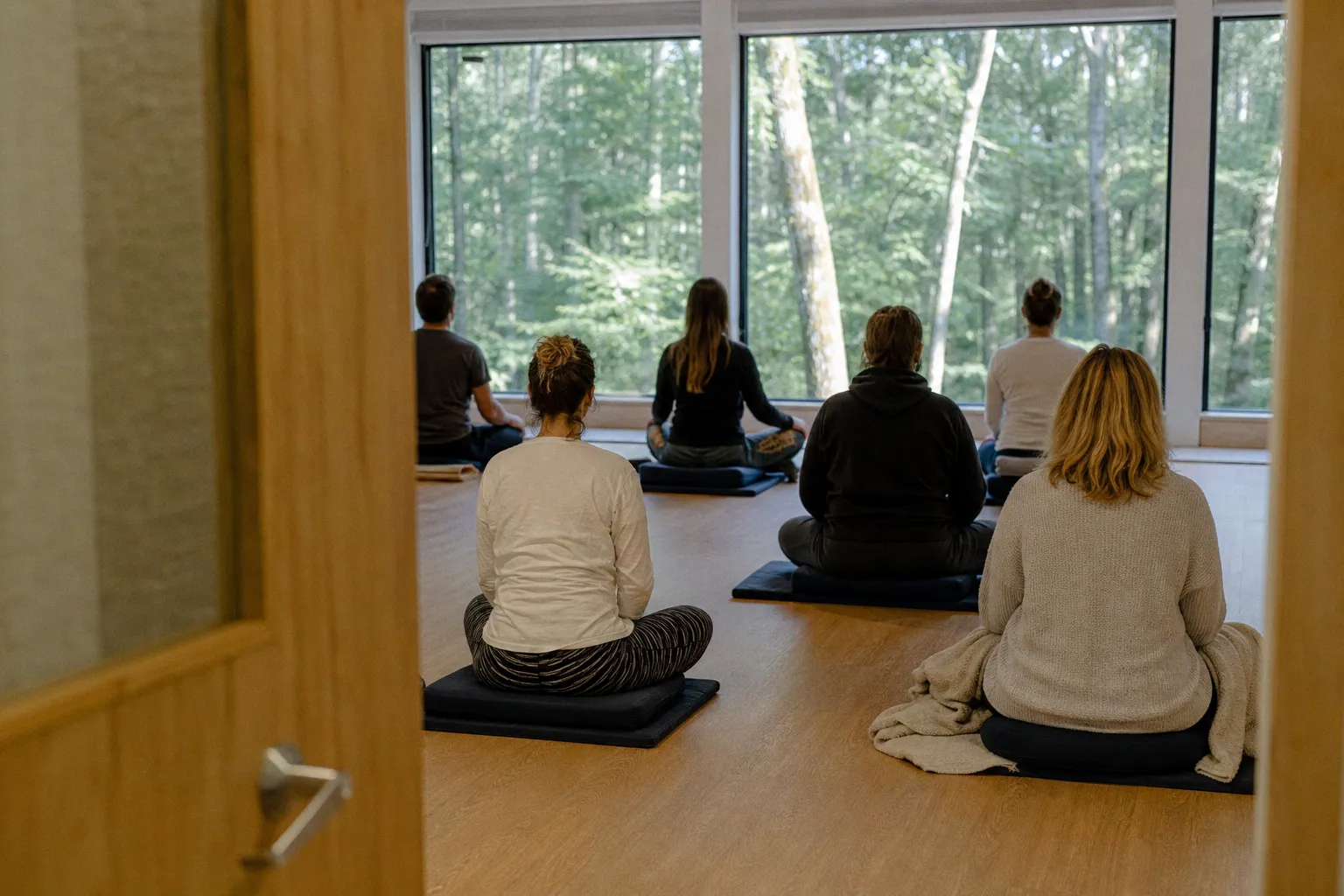
MBSR is technically an educational program, not a form of clinical psychotherapy. Founded in 1979 by Jon Kabat-Zinn at the University of Massachusetts Medical School, the standard MBSR curriculum runs for eight consecutive weeks. Each week includes a 2.5-hour group session, supplemented by one full-day (six-hour) silent retreat, usually held between weeks five and seven. The format is intentionally cohort-based: you sit with a small group of strangers, learn specific meditation and body-awareness techniques, and are then expected to integrate that learning into ordinary life.
CBT, by contrast, is a clinical psychological treatment delivered by a licensed psychotherapist. Protocols designed for burnout and chronic stress typically span eight to ten weekly sessions, with each meeting lasting around 90 minutes. The work happens in dialogue, often one-on-one, with a clinician guiding you through structured cognitive restructuring and behavioral activation exercises. There is no silent retreat in CBT; the transformation is built through the active reframing of thought patterns that keep you locked in cycles of exhaustion.
Here is how the two structures compare side by side:
| Dimension | MBSR | CBT |
|---|---|---|
| Classification | Educational program | Clinical psychotherapy |
| Standard Duration | 8 weeks | 8–10 weeks |
| Session Length | 2.5 hours (group) | ~90 minutes (usually individual) |
| Core Mechanism | Present-moment awareness and meditation | Cognitive restructuring and behavioral activation |
| Daily Time Commitment | 45 minutes of formal home practice | 15–30 minutes of structured homework |
| Cohort Format | Small group + one 6-hour silent retreat | Typically one-on-one dialogue |
The architecture of the program tells us what kind of work is being asked of us — silent attention versus structured dialogue.
Cognitive Restructuring vs. Present-Moment Awareness in Reducing Emotional Exhaustion
Both approaches have been validated as effective interventions for burnout, particularly among healthcare professionals and high-stress knowledge workers. A 2025 meta-analysis of third-wave CBT and mindfulness-based interventions reported a standardized mean difference of -0.686 for reductions in emotional exhaustion, alongside a -0.529 reduction in depersonalization. These are meaningful numbers: they translate to clinically significant relief from the two symptoms that most reliably signal burnout's grip. Some MBSR studies have reported up to a 33% reduction in perceived stress among completers.
But the mechanisms differ sharply. CBT operates on the principle that your thoughts, feelings, and behaviors are interlinked, and that by identifying and restructuring distorted cognitive patterns — the "should" statements, the catastrophizing, the all-or-nothing thinking — you can interrupt the emotional cascade that fuels exhaustion. It is analytical work, often supported by homework like thought records and behavioral experiments.
MBSR takes the opposite fork in the road. Rather than analyzing the content of your thoughts, it trains you to observe thoughts and bodily sensations as transient events. You are not asked to change the thought; you are asked to change your relationship to it. This is the essence of present-moment awareness: learning to notice the rising tide of irritation, anxiety, or despair before it pulls you under, and responding with a steadier, less reactive stance.
Neither approach is inherently superior for emotional exhaustion as a whole, and most trials report equivalent outcomes when measured across the full spectrum of burnout symptoms. The choice between them often comes down to which kind of cognitive work resonates with how your mind naturally processes difficulty.
Managing the Physiological Response: HPA Axis Habituation and the Cortisol Myth
This is where the wellness industry often leads you astray, and where groundedness matters most. There is a popular narrative that chronic stress leaves you with permanently elevated cortisol, and that the right program will "lower your cortisol." The reality is more nuanced.
Both MBSR and CBT appear to promote better habituation of the HPA axis — the hypothalamic-pituitary-adrenal system that governs your stress response. Habituation refers to the body's ability to recover from an acute stressor rather than remaining locked in a high-alert state. In other words, these programs help your nervous system return to baseline more efficiently after a difficult meeting or a tense evening, rather than drowning you in cortisol all day long.
What the evidence does not support is the claim that either program significantly reduces total daily cortisol output. The story is not about quieting your hormones into submission; it is about teaching the body that the threat has passed. This distinction matters, because chasing hormonal shortcuts can pull you away from the slow, deliberate work that actually restores physiological equilibrium. The focus shifts from a biochemical target to a functional one: can your system disengage? The goal isn't a lower number on a lab report, but a quicker return to equilibrium after the spike. Think of it as training a stress-response muscle to relax efficiently, rather than trying to chemically numb it.
If you are comparing MBSR and CBT programs for chronic burnout and encounter a provider selling dramatic hormonal shifts, treat that as a signal worth examining more closely. Quality clinical and educational programs speak in terms of habituation, resilience, and recovery — not in promises of biochemical overhaul.
The Adherence Challenge: 45 Minutes of Daily Practice vs. Behavioral Activation
No conversation about how to choose between MBSR and CBT for burnout recovery is complete without addressing what each program demands of you between sessions. Adherence is where most participants quietly falter, and it is where the two programs diverge most sharply.
MBSR requires a substantial commitment to daily home practice. The standard protocol asks for 45 minutes of formal mindfulness practice every single day for the duration of the eight-week course, alongside informal awareness exercises woven into ordinary activities. For someone in the throes of severe burnout, this can feel like being asked to run a marathon while recovering from a broken leg. The program's effectiveness is strongly tied to consistent practice, which means the very people who most need the intervention can find it hardest to complete. The practice itself is the treatment; skipping it is like missing doses of medication.
CBT sidesteps this particular hurdle by leaning into behavioral activation — the principle that small, intentional actions shift your emotional state. Homework assignments tend to be shorter and more distributed throughout the week, often 15 to 30 minutes of structured cognitive work. For participants whose burnout manifests as paralysis or avoidance, this can feel more manageable, though it carries its own demands: the willingness to confront the thoughts you have been avoiding. The work is more directive and externally scaffolded, which can be a crucial advantage when self-directed motivation is at its lowest ebb.
The program we can actually sustain is more important than the program with the most impressive theoretical framework.
When weighing MBSR and CBT for chronic burnout, take an honest inventory of your current capacity. If you can carve out a quiet morning ritual for eight weeks, MBSR's daily practice may anchor you. If your reserves are depleted to the point where even small structured tasks feel monumental, CBT's lower time commitment and active coaching may serve you better in the short term.
Symptom-Specific Selection: Targeting Rumination vs. Physical Anxious Arousal
This is the granular distinction that often gets lost in broad comparisons. Research suggests that MBSR may be slightly more effective at reducing worry and rumination — that sticky, circular mental tape that replays yesterday's mistakes and tomorrow's catastrophes on an endless loop. The meditation-based training appears to interrupt the ruminative cycle by cultivating a wider observational perspective on thoughts. It teaches you to watch the thoughts scroll by like a ticker tape, rather than being pulled onto the train.
CBT, meanwhile, shows a comparative advantage in reducing physical symptoms of anxious arousal: the racing heart, the shallow breath, the knot in the stomach, the restless leg. By directly targeting the cognitive triggers that activate the autonomic nervous system, CBT can help dismantle the sympathetic overdrive that often accompanies burnout. It provides a toolkit for dismantling the thought patterns that are currently fueling that physical alarm system.
A simple way to anchor this choice in your own experience:
1. Conduct a one-week body-and-mind audit. Notice whether your burnout lives primarily in your head — endless planning, sleepless analysis, obsessive rehearsal — or in your body — tight chest, clenched jaw, persistent fatigue that a long weekend cannot touch.
2. Track the pattern across at least five evenings before deciding. One bad day is a mood; a week is a signal. Look for the dominant theme, not the outlier.
3. Match the dominant signal to the protocol's strength. If the mental noise is deafening, MBSR's observational training may be the priority. If your body feels like it's stuck in a permanent alarm state, CBT's direct cognitive work on triggers may offer faster relief.
4. Revisit the choice at the four-week mark. Burnout is a dynamic state. Many integrated clinicians will adjust the balance as the picture sharpens, and your own data from the first month will be invaluable.
For many of us, the honest answer is that both dimensions are present, which is why some practitioners now integrate elements of both. The 2017 update to the UMass MBSR Authorized Curriculum Guide reflects this growing awareness, and many third-wave CBT protocols borrow explicitly from mindfulness traditions. But when starting fresh, this symptom-specific lens offers a clearer path forward than choosing based on convenience or a friend's recommendation.
A Grounded Starting Point
If you are standing at this decision point and feeling overwhelmed by the options, anchor yourself with a single, concrete micro-habit. Before you commit to either an MBSR course or a CBT practitioner, spend one week keeping a brief evening log — not of your productivity, but of when your mind spins (rumination) versus when your body protests (tension, breath, fatigue). A few lines per evening, no analysis, just noticing. This is the same skill MBSR trains, applied now as a decision-making tool.
That simple record will give you, and any qualified clinician you choose to work with, a far clearer picture of where to begin than any self-assessment quiz can. The process of finding the right clinical setting and provider is a parallel process worth approaching with the same care you are bringing to your recovery itself. Look for instructors or therapists who can speak fluently about both protocols, who do not oversell either one, and who treat your autonomy as a partner in the work. A good fit is someone who listens to your specific symptom profile before recommending a path.
The path out of chronic burnout is rarely a single intervention. But choosing between MBSR and CBT programs for chronic burnout becomes considerably less confusing when you let your own nervous system, rather than external rankings or marketing promises, guide the first step.