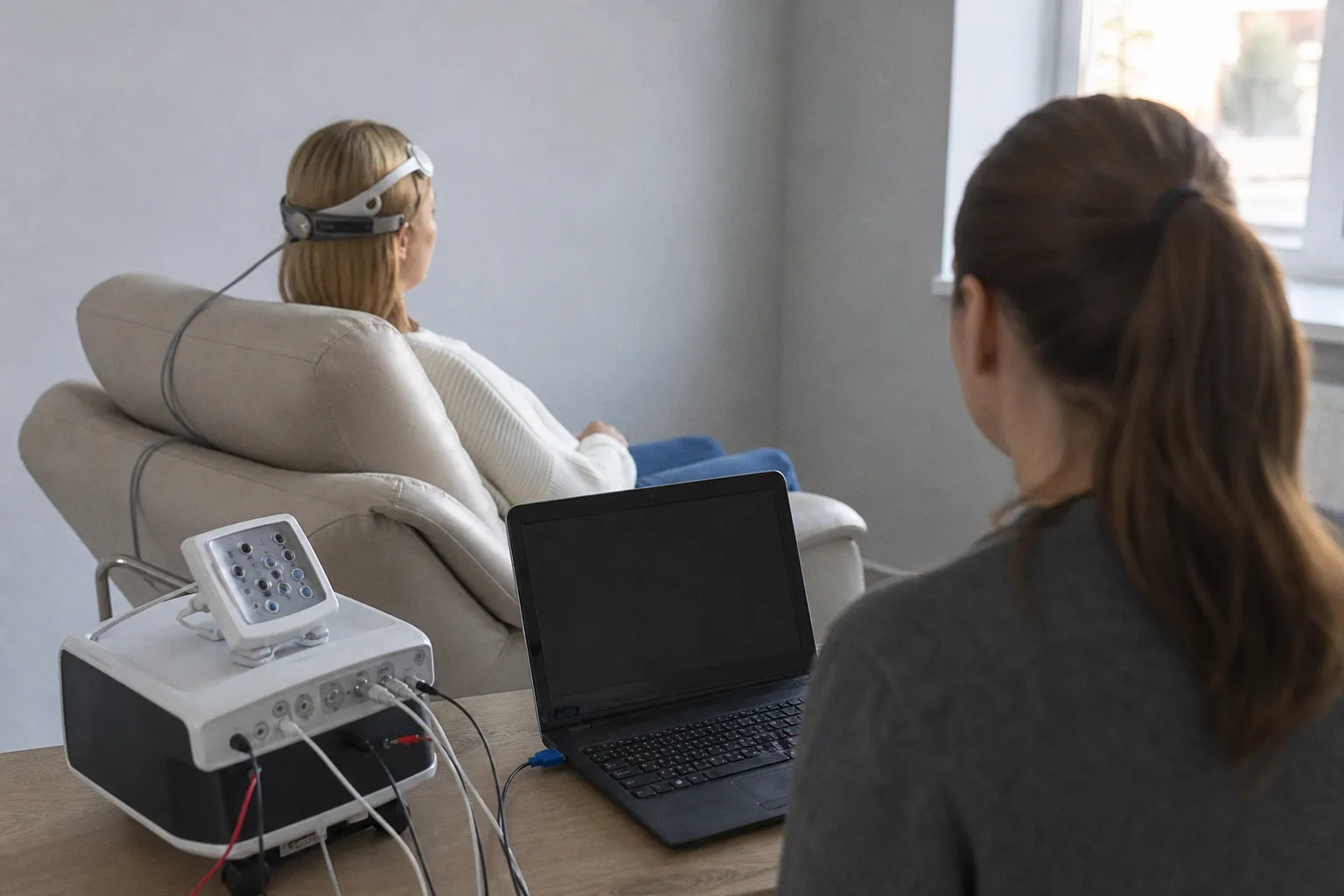
Biofeedback is moving closer to everyday care
Biofeedback devices sit in that increasingly crowded space between clinical support, wellness tracking, and at-home self-regulation. The core appeal is understandable: when we are anxious, exhausted, or caught in a stress loop, visible feedback can help us notice patterns that are otherwise hard to name. For some people, that can become an anchor for breathing practice, relaxation training, or work with a clinician.
The IndexBox item frames the market around growth forecasting to 2035 and points to AI and telemedicine as forces behind demand. Even without the fuller report text, that pairing tells us where the pressure is likely to land: more remote use, more automated interpretation, and more products that promise to translate body signals into guidance.
That is where we need to slow down. In a clinic, biofeedback is not simply a gadget; it is part of a therapeutic process. The value depends on how the device is used, who interprets the data, and whether the feedback helps a person build skills rather than become more vigilant about every bodily fluctuation.
What patients and clients should check before saying yes
If a clinic, coach, app, or telehealth provider offers biofeedback, the first document to ask for is a plain-language explanation of what the device measures and what it does not measure. We should be wary of any setting where stress, anxiety, sleep quality, or “nervous system balance” is presented as if a single reading can settle the matter.
The second question is about data. Telemedicine can make care more accessible, but it also means bodily information may travel through platforms, dashboards, and third-party tools. Before using a device, ask who can see the data, how long it is stored, whether it is shared outside the care team, and whether you can request deletion or a copy of your records.
The third question is clinical responsibility. If AI is involved, ask whether it is generating suggestions, summaries, risk labels, or treatment prompts — and who reviews them. A reassuring interface is not the same as accountable care. For mental health and stress support, we need to know when a human clinician steps in, what happens if symptoms worsen, and whether the tool is optional rather than a condition of receiving care.
This is not about rejecting technology. It is about keeping the relationship clear: the device can support awareness, but it should not replace careful assessment, informed consent, or the patient’s own experience of distress.
The sleep-wellness crossover needs the same caution
The separate Global Growth Insights item on melatonin market trends belongs to the same wider story: sleep, stress, and cognitive performance are now major consumer categories. Many people arrive at biofeedback, mindfulness apps, or sleep products from the same place — lying awake, feeling overstimulated, and wanting something concrete to do.
That vulnerability matters. When we are tired, we are more likely to accept confident claims and less likely to read the conditions attached to a service. The healthiest approach is not cynicism; it is a steadier kind of consent. Before buying or enrolling, look for the boundaries of the promise: what outcome is being claimed, what evidence is being offered, what support is available if it does not help, and what the costs are if you stop.
A small habit for this week: before trying any stress or sleep technology, write down one sentence — “I want this tool to help me with…” If the product, clinic, or app cannot clearly explain how it supports that goal, without inflating what it can know about you, that pause may be the most clinically useful feedback you receive.